


 Français
 عربى
عربى
Product Consultation
Your email address will not be published. Required fields are marked *
Content
The most common shower cubicle size is 900 mm × 900 mm (35" × 35"), which fits comfortably in most bathrooms while providing enough room for an average adult. However, standard sizes range from a compact 700 mm × 700 mm up to a spacious 1200 mm × 900 mm or larger walk-in format. Glass kitchen partitions, meanwhile, typically span floor-to-ceiling at heights of 2100 mm to 2700 mm and come in widths starting at 600 mm per panel.
Both products share a common design principle: the right size is not about maximizing space, but about fitting the available footprint precisely while meeting functional requirements. Getting either measurement wrong leads to wasted floor area, awkward installations, or expensive retrofits.
Shower cubicles are available in a range of configurations. The shape — square, rectangular, or quadrant — directly affects which size category applies.
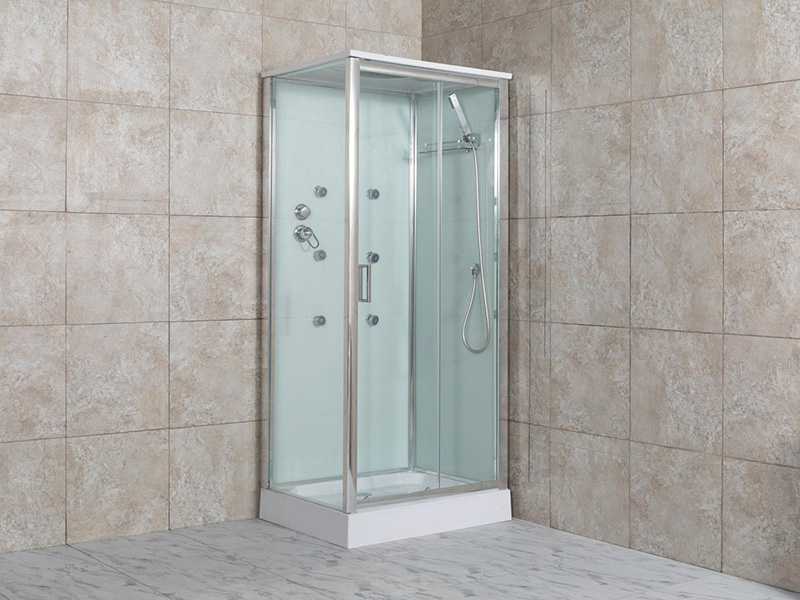
Square enclosures are the most popular format for standard bathrooms. Common sizes include:
Rectangular enclosures maximize showering comfort when bathroom width is restricted but length is available. Typical dimensions include:
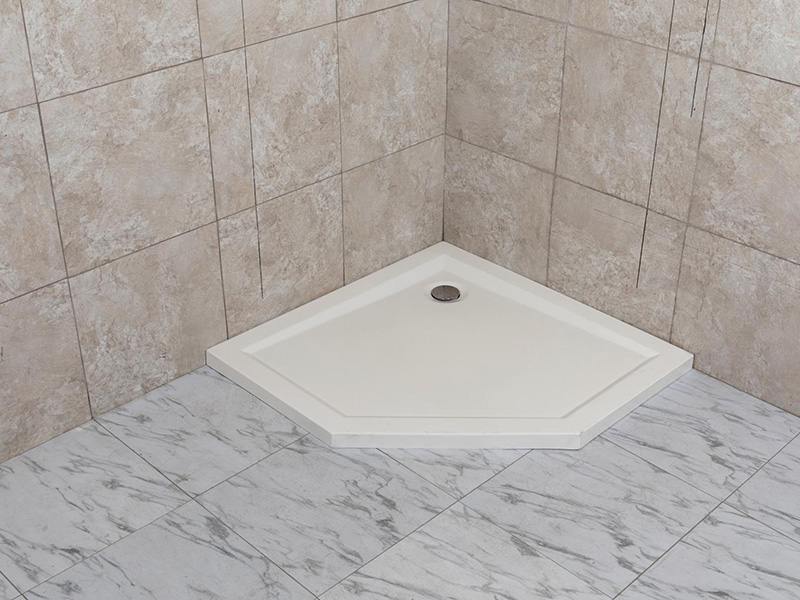
Quadrant enclosures have a curved front door and fit neatly into a corner. Standard sizes are 800 × 800 mm and 900 × 900 mm. Their curved profile makes them slightly more space-efficient than square enclosures of the same nominal dimensions because they use dead corner space without protruding as far into the room.
The table below summarizes common cubicle sizes, their best-use scenarios, and approximate minimum bathroom floor area required for installation with comfortable circulation space:
| Cubicle Size | Shape | Best For | Min. Bathroom Area |
|---|---|---|---|
| 700 × 700 mm | Square | Cloakrooms, tight en-suites | ~3.0 m² |
| 800 × 800 mm | Square | Small bathrooms | ~3.5 m² |
| 900 × 900 mm | Square | Standard family bathrooms | ~4.0 m² |
| 1000 × 800 mm | Rectangular | Medium bathrooms | ~4.5 m² |
| 1200 × 800 mm | Rectangular | Master bathrooms, accessibility | ~5.0 m² |
| 1400 × 900 mm+ | Walk-in / Wet room | Luxury bathrooms, open showers | ~6.0 m²+ |
Inaccurate measurement is the single most common cause of shower enclosure returns and installation problems. Follow these steps before ordering:
Most shower enclosure manufacturers include an adjustment range of ±10 to 20 mm in their profiles to accommodate minor wall irregularities. If your measurement falls between two standard sizes, always choose the smaller unit and rely on the adjustment range rather than risk an oversize enclosure that cannot be fitted.
A glass kitchen partition is a fixed or frameless glass panel — or series of panels — used to visually or physically separate a kitchen from an adjoining living or dining area without fully enclosing it. Unlike a solid wall, a glass partition preserves sightlines and natural light flow, making it the preferred choice in open-plan homes where residents want to contain cooking odors and noise while maintaining a sense of openness.
They are also increasingly used in commercial kitchens and office breakout spaces, where transparency improves supervision and creates a more inviting atmosphere. A 10 mm toughened safety glass panel is the most common specification for residential kitchen partitions; commercial settings may use 12 mm or laminated glass for additional acoustic and impact resistance.
The right partition type depends on your layout, how much separation you need, and your budget.
A single frameless or slim-framed glass panel running floor-to-ceiling. This provides maximum visual separation and the best acoustic and odor containment. It is typically used where a doorway opening is included in the design — either as a hinged glass door or a frameless sliding panel integrated into the partition run.
A partial-height glass panel — usually 900 to 1200 mm tall — that sits on top of a kitchen counter or island. This configuration is popular in galley-style kitchens where a worktop divides kitchen and living zones. It provides a visual break and splash protection without interrupting the flow of conversation or air circulation.
A full-height panel mounted on a top-hung sliding track. When open, the kitchen is fully integrated with the living space; when closed, it functions as a near-solid divider. This is the most flexible option but requires sufficient wall space for the panel to retract — typically the full width of the opening plus 50–100 mm clearance.
Inspired by industrial warehouse windows, these partitions use thin black or bronze steel frames divided into geometric panes. They offer strong aesthetic impact and are highly durable, but the steel frames reduce transparency compared to frameless glass. Frame widths of 25 to 45 mm are typical; narrower frames cost more but look cleaner.
Not all glass is suitable for kitchen use. The close proximity to heat sources, moisture, and cooking impact means specification choices matter significantly:
| Partition Type | Typical Height | Glass Thickness | Approx. Installed Cost |
|---|---|---|---|
| Half-height counter panel | 900–1200 mm | 8–10 mm | £300–£700 |
| Full-height frameless fixed | 2100–2400 mm | 10–12 mm | £900–£2,500 per panel |
| Crittall-style steel frame | 2100–2700 mm | 6–8 mm per pane | £1,200–£3,500 per m² |
| Sliding glass partition | 2100–2400 mm | 10–12 mm | £1,500–£4,000 per run |
| Smart switchable glass | Floor-to-ceiling | 12–14 mm (laminated) | £400–£900 per m² |
Both shower cubicles and glass kitchen partitions touch on regulatory requirements that are often overlooked at the planning stage.
In the UK, shower enclosures must use safety glazing compliant with BS EN 12150 (toughened glass) or BS EN ISO 12543 (laminated glass), as required by Part N of the Building Regulations. In practice, virtually all commercially sold enclosures already meet this standard, but always verify with the supplier when specifying bespoke sizes. For accessible bathrooms designed to Part M standards, the minimum shower enclosure size increases to 1200 mm × 900 mm to accommodate wheelchair or walker access.
Internal glass partitions in kitchens are classified as critical locations under Building Regulations Part N, meaning only safety glass is permitted. If the partition forms part of a fire-rated assembly — for example, separating a kitchen from a hallway in a flat — fire-rated glazing (e.g., Pyroguard or Pilkington Pyroclear) rated to EW 30 or EI 30 may be required. Always consult a structural engineer if the partition wall being replaced is load-bearing.
Mirrors for Your Room: Every Type and How to Use Them
Sliding Doors for Living Room & Shower Cubicle Measurements: Full Guide
Your email address will not be published. Required fields are marked *

 Tel: +86 13967167585
 E-mail: [email protected]
Copyright 2023 Anhui D-MAN Smart Home Co., Ltd. All Rights Reserved Shower Enclosures Manufacturers Shower Room Design Custom
