


 Français
 عربى
عربى
Product Consultation
Your email address will not be published. Required fields are marked *
Content
A mirror is one of the few decorating tools that does double duty: it serves a practical function while also shaping how a room looks and feels. The type of mirror you choose — its shape, frame, size, and placement — directly affects whether a room feels larger, brighter, more elegant, or more grounded. Get it right, and a single mirror can anchor an entire room. Get it wrong, and even an expensive piece can look out of place or make a space feel off.
This guide breaks down every major mirror type used in home interiors, explains what each does best, and helps you match the right mirror to the right room and purpose.
Before going deeper, here's a quick reference for the most common mirror types and where they work best:
| Mirror Type | Best Room | Primary Function |
|---|---|---|
| Full-Length Mirror | Bedroom, hallway | Head-to-toe reflection, space expansion |
| Wall Mirror | Living room, dining room | Décor focal point, light reflection |
| Vanity Mirror | Bathroom, bedroom | Close-up grooming, task lighting |
| Leaner Mirror | Bedroom, living room | Casual style, large reflection without mounting |
| Accent / Decorative Mirror | Any room | Visual interest, style statement |
| Overmantel Mirror | Living room | Fireplace focal point, grandeur |
| Bathroom Vanity Mirror | Bathroom | Daily grooming, moisture resistance |
| Sunburst / Starburst Mirror | Living room, entryway | Bold wall art, retro or glam aesthetic |
| Mirror Gallery Wall | Hallway, living room | Layered décor, curated aesthetic |
A full-length mirror — typically 48 to 72 inches tall — is the most practical mirror you can add to a bedroom. It lets you see your entire outfit at once, which dressing room mirrors confirm reduces the time spent getting ready. Beyond function, a tall mirror placed opposite a window can noticeably brighten a dim room by bouncing natural light across a larger surface area.
Full-length mirrors work in nearly every room style — minimal, maximalist, rustic, or modern — because the frame carries the design weight. A thin black metal frame suits contemporary spaces; a thick ornate gold frame adds a classic or maximalist touch.
A leaner mirror is essentially an oversized full-length mirror designed to rest against a wall rather than hang from it. They typically start at 60 inches tall and can reach 80 inches or more, making them one of the most impactful single pieces you can add to a room. Because they don't require drilling, they're ideal for renters or anyone who wants flexibility in rearranging a space.
Leaner mirrors have a casual, intentional quality that works especially well in bedroom corners or living room walls where you want a large reflective surface without the formality of a mounted piece. A wide wood-framed leaner in a neutral bedroom can serve as the room's dominant design element.
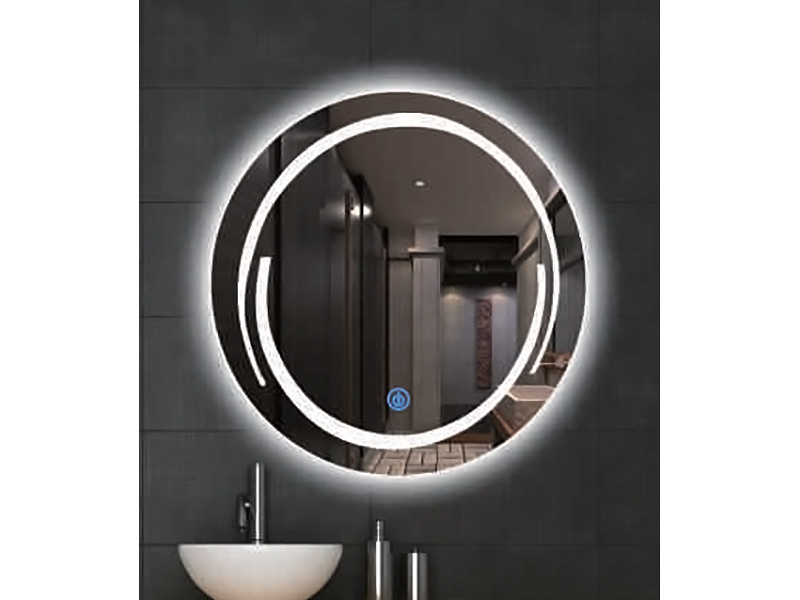
Wall mirrors are the broadest category — any mirror mounted to a wall qualifies — but in living rooms and dining rooms, they're chosen primarily for how they look and how they affect the room's atmosphere. A large circular mirror above a console table, for example, creates a focal point while visually expanding the space behind the viewer.
Round mirrors soften rooms with sharp architectural lines. Rectangular mirrors reinforce structured, symmetrical layouts. Arched mirrors bridge the gap between the two, offering height without rigidity.
A vanity mirror is a smaller, task-focused mirror designed for detailed grooming — applying makeup, shaving, or skincare routines. They typically sit on a surface or mount directly to a wall above a vanity or desk. Many include built-in lighting, and models with adjustable magnification (5x to 10x) are particularly useful for precision tasks where a standard mirror doesn't provide enough detail.
For bedroom vanities, a lighted vanity mirror with a warm light setting (around 3000K color temperature) most accurately mimics natural daylight — making it easier to apply makeup that looks good in multiple lighting environments.
Bathroom mirrors must contend with steam, humidity, and temperature swings that would damage standard mirrors over time. Look for mirrors rated for bathroom use, which use moisture-resistant backing to prevent the silver layer behind the glass from oxidizing — a process that creates dark spots or black edges, known as "desilvering."
Beyond practicality, the bathroom mirror is often the room's largest and most visible design element. A mirror that spans the full width of a double vanity (typically 60–72 inches) creates a seamless, spa-like look. Framed mirrors add warmth; frameless mirrors suit minimalist and modern bathrooms.
A medicine cabinet mirror combines storage with reflection — a practical choice for small bathrooms where counter space is at a premium. Recessed models sit flush with the wall for a cleaner look, while surface-mounted versions are easier to install without cutting into drywall.
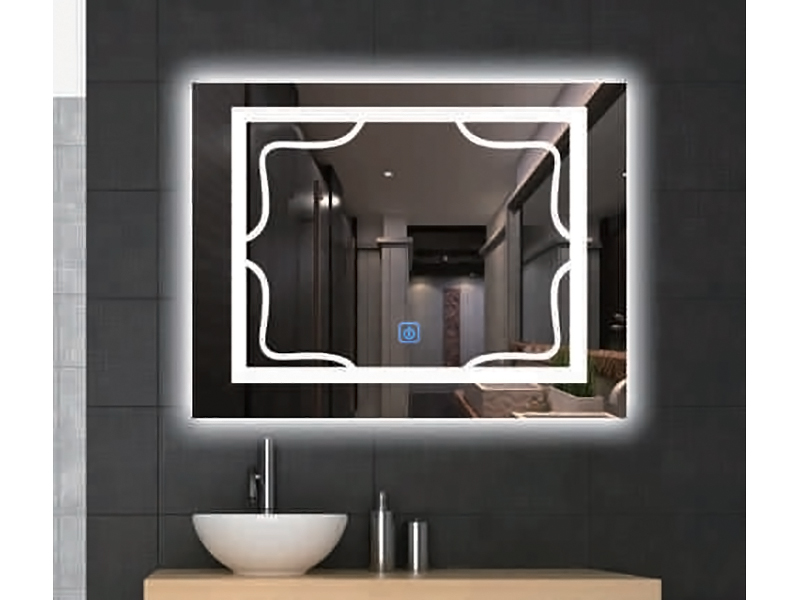
Some mirrors are chosen almost entirely for their visual impact. These decorative pieces prioritize frame design, shape, or material over reflective area — and they work best when placed where they'll be seen as art, not relied upon for grooming.
A sunburst mirror — with radiating spokes extending outward from a central circular glass — became iconic in mid-century modern interiors and has remained a popular statement piece. The mirror itself is often small (the reflective area may only be 10–12 inches across), but the overall diameter, including the frame, can reach 36 inches or more. They work best above a fireplace, console table, or as a solo accent on a plain wall.
Designed specifically to sit above a fireplace mantel, overmantel mirrors are wide, often ornately framed, and traditionally rectangular or arched. They add grandeur to living rooms and dining rooms, and their position above a fireplace — a natural focal point — maximizes their visual impact. A well-chosen overmantel mirror can make a living room feel 30–40% larger by reflecting the opposite wall and doubling the perceived depth of the space.
Grouping several smaller mirrors of varying shapes and frames creates a gallery wall effect. This approach works particularly well in hallways, stairwells, or living room walls that need visual texture without heavy art investment. Mixing round, rectangular, and geometric mirrors in complementary finishes (gold, black, natural wood) gives the arrangement cohesion without rigidity.
Matching a mirror to a room comes down to three questions: What do you need it to do? How much space do you have? What style does the room already have?
Prioritize a full-length or leaner mirror for dressing, paired with a smaller vanity mirror if you do detailed grooming in the room. Avoid placing a mirror directly facing the bed — a common design note for those sensitive to light reflection from windows in the early morning.
A large wall mirror (24 inches or wider) placed opposite a window is one of the most effective ways to brighten a living room. Choose a frame that complements the room's dominant material — wood frames for warm, natural spaces; metal frames for industrial or contemporary rooms; ornate plaster or resin frames for traditional interiors.
Mirrors are one of the most reliable tools for making small spaces feel larger. In a narrow hallway, a full-length mirror or a horizontal rectangular mirror can visually double the width. In a small bedroom, a large leaner in a corner creates depth without taking up floor space. The key is scale — a mirror that's too small for the wall will look timid and won't produce the spatial effect you're after.
An entryway mirror serves both function (a last-look check before leaving) and tone-setting. A tall arched mirror or a decorative sunburst creates a strong first impression. Position it beside or opposite the front door, not directly facing it — mirrors facing a door can feel visually jarring when entering a space.
The frame is as important as the glass. It connects the mirror to the room's design language and determines whether the piece blends in or stands out.
One Side Mirror Glass: Make a Small Room Look Bigger
Shower Cubicle Sizes & Glass Kitchen Partitions Guide
Your email address will not be published. Required fields are marked *

 Tel: +86 13967167585
 E-mail: [email protected]
Copyright 2023 Anhui D-MAN Smart Home Co., Ltd. All Rights Reserved Shower Enclosures Manufacturers Shower Room Design Custom
