


 Français
 عربى
عربى
Product Consultation
Your email address will not be published. Required fields are marked *
Content
Placing a large one side mirror glass on a wall opposite a window is the single most effective mirror trick for making a small room feel significantly larger. The reflected light and duplicated depth create a visual illusion that can make a room feel up to twice its actual size. Interior designers routinely use this approach before recommending any structural change or furniture swap — it costs less, installs in an afternoon, and the impact is immediate.
One side mirror glass — also called one-way mirror glass — reflects on one surface while allowing light transmission from the other. In interior design contexts, standard reflective mirror glass is most commonly used, but one-way variants have specific applications in partition walls, built-in cabinetry, and feature walls where both reflection and partial transparency are desirable. Understanding the difference helps you choose the right product for your room.
One side mirror glass has a reflective coating applied to only one face of the glass panel. From the coated side, it functions as a standard mirror. From the uncoated side, it transmits light — making it partially see-through depending on the lighting differential between the two sides.
This property makes it useful in specific interior design scenarios beyond simple wall mirrors. Common applications include:
| Feature | One Side Mirror Glass | Standard Mirror |
|---|---|---|
| Reflective surface | One face only | One face only |
| Light transmission | Partial (from reverse side) | None |
| Best use case | Partitions, feature walls, dividers | Wall-mounted mirrors, wardrobes |
| Privacy function | Yes (when brighter side faces viewer) | No |
| Typical thickness | 4–6 mm | 3–6 mm |
| Cost (relative) | Moderate to high | Low to moderate |
Placement determines whether a mirror genuinely expands a space or simply adds a reflective surface without spatial benefit. The goal is always to reflect something worth doubling — natural light, a view, or architectural depth.
This is the most impactful placement. A mirror hung directly across from a window reflects the outdoor view and bounces natural light deep into the room. In a study by lighting researchers at the Lighting Research Center, rooms with mirror-reflected daylight were perceived as up to 30% more spacious than identical rooms without mirrors. The larger the mirror relative to the window, the stronger the effect.
In a rectangular room, placing a large mirror on the shortest end wall visually extends the room's length. This trick is especially effective in narrow hallways, galley kitchens, and elongated bedrooms. A floor-to-ceiling panel works best here — it removes the visual boundary of the wall rather than simply decorating it.
Mounting mirror glass behind open shelving or a console table adds depth behind objects, making the furniture appear to float within a larger space. This works particularly well in living rooms and entryways. Use full-panel one side mirror glass rather than small decorative pieces for maximum depth effect.
A horizontal mirror placed low on the wall — at baseboard height, for example — reflects the ceiling, visually raising it. Pairing this with vertical mirror panels creates the impression of a taller, airier space, a technique commonly used in boutique hotel rooms averaging under 20 square meters.
Size matters more than shape when the goal is spatial expansion. A single large mirror outperforms a gallery wall of small decorative mirrors in almost every space-expanding scenario. That said, shape influences the specific effect produced.
| Room Type | Recommended Mirror Size | Best Placement |
|---|---|---|
| Small bedroom | Full-length, 45–60 cm wide | Adjacent to or opposite window |
| Narrow hallway | Floor-to-ceiling panel | End wall or long side wall |
| Small living room | 90–120 cm wide, wall-mounted | Opposite main window or sofa wall |
| Compact bathroom | Full vanity wall width | Above sink, extending to ceiling |
| Studio apartment | Large panel or mirrored wall | Shortest wall or behind dining area |
Using mirrors incorrectly can counteract their spatial benefits or create visual discomfort. These are the placement and selection errors seen most frequently in small room design.
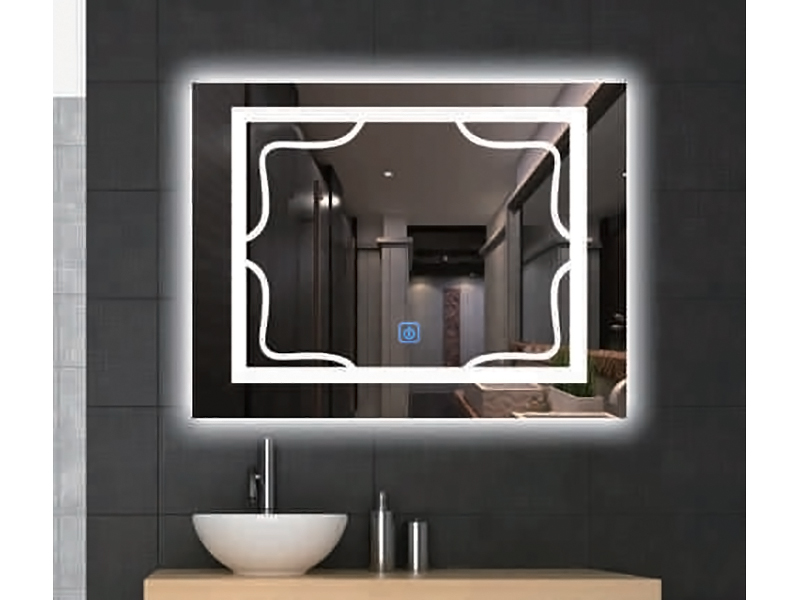
Large mirror glass panels require secure mounting. A 90 × 180 cm glass panel can weigh between 18 and 25 kg depending on thickness — improper installation is a significant safety risk. The following guidelines apply to standard wall-mounted one side mirror glass.
Wall mirrors are the most obvious application, but one side mirror glass expands a space in several other formats that are worth considering based on your room's layout and existing furniture.
Mirrored side tables, coffee table tops, and console tables use one side mirror glass cut to size. These pieces reflect light from table lamps and ambient sources, adding luminosity at a lower height than wall mirrors. Interior designers frequently pair a mirrored console with a large wall mirror above it to create a layered reflective effect that expands space both horizontally and vertically.
Full-length mirrored wardrobe doors are among the most space-efficient mirror applications because they serve two functions simultaneously — storage and spatial expansion — without occupying any additional floor space. In rooms smaller than 12 square meters, mirrored wardrobe doors can visually double the perceived floor area.
In compact kitchens and bathrooms, one side mirror glass cut as a splashback panel reflects the room back on itself at counter height. This is particularly effective in galley kitchens where the narrow footprint benefits from any technique that creates the impression of additional width.
A partial or full ceiling mirror panel dramatically increases perceived room height. This technique requires professional installation using specialist ceiling fixings and is most commonly applied in small luxury bathrooms, dressing rooms, and boutique retail spaces. Even a single 60 × 60 cm ceiling tile in smoked or clear mirror glass above a key area — such as a bathtub or dressing table — produces a noticeable spatial effect.
Designer Mirrors & Toughened Glass: What You Need to Know
Mirrors for Your Room: Every Type and How to Use Them
Your email address will not be published. Required fields are marked *

 Tel: +86 13967167585
 E-mail: [email protected]
Copyright 2023 Anhui D-MAN Smart Home Co., Ltd. All Rights Reserved Shower Enclosures Manufacturers Shower Room Design Custom
