


 Français
 عربى
عربى
Product Consultation
Your email address will not be published. Required fields are marked *
A designer mirror is only as good as the glass behind it. Toughened glass — also called tempered glass — is the industry standard for high-quality mirrors, offering up to five times the strength of ordinary annealed glass and shattering into safe, rounded fragments rather than dangerous shards. If you're investing in a statement mirror for your home or commercial space, understanding both the material and the design principles will help you make a choice you won't regret.
Content
Toughened glass is produced by heating standard float glass to approximately 620°C (1,148°F) and then rapidly cooling it through a process called quenching. This thermal treatment creates compressive stress on the surface and tensile stress in the core, dramatically increasing the glass's resistance to impact, thermal shock, and flexing.
The practical difference is significant. Standard 4mm float glass breaks at around 7,000 psi, while toughened glass of the same thickness withstands pressures up to 24,000 psi. When it does break, it crumbles into small, blunt-edged pebbles rather than long, sharp splinters — a property known as "safe breakage."
| Property | Standard Glass | Toughened Glass |
|---|---|---|
| Impact Strength | ~7,000 psi | ~24,000 psi |
| Thermal Resistance | Up to ~80°C delta | Up to ~250°C delta |
| Breakage Pattern | Sharp shards | Blunt pebbles |
| Can Be Cut After Treatment | Yes | No |
| Typical Thickness Range | 2–19mm | 4–19mm |
One important limitation: toughened glass cannot be cut, drilled, or shaped after tempering. All sizing and finishing must happen before the glass enters the furnace, which is why custom designer mirrors require precise measurements upfront.
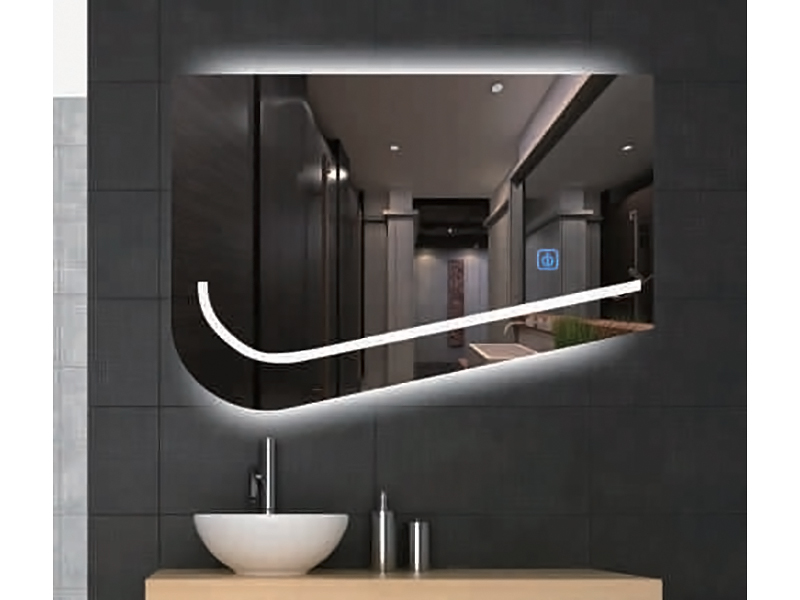
Designer mirrors are statement pieces — they're large, wall-mounted, and often placed in high-traffic areas like entryways, bathrooms, and living rooms. In these contexts, using toughened glass isn't just a quality upgrade; in many jurisdictions it's a legal requirement.
In the UK, for instance, building regulations and BS 6206 standards mandate safety glazing in locations where human impact is foreseeable — including mirrors mounted at or near floor level, or in bathrooms. The European standard EN 12600 applies similarly across EU countries. In the US, CPSC 16 CFR Part 1201 sets safety glazing standards for architectural applications.
Mirror design has evolved well beyond the functional rectangle. Today's designer mirrors function as architectural focal points, and their design — shape, frame material, finish, and placement — is as deliberate as any piece of furniture.
The silhouette of a mirror can completely redefine a room's character:
The frame material defines not just aesthetics but durability. Common choices include:
Beyond clear silver mirrors, designer options now include:
Choosing a designer mirror involves balancing aesthetics, function, and practical installation considerations. Use this framework:
Toughened glass mirrors are durable, but the reflective silver backing is more vulnerable than the glass itself. To protect both:
Bathroom With Glass Walls: Design Ideas, Costs & Installation Tips
One Side Mirror Glass: Make a Small Room Look Bigger
Your email address will not be published. Required fields are marked *

 Tel: +86 13967167585
 E-mail: [email protected]
Copyright 2023 Anhui D-MAN Smart Home Co., Ltd. All Rights Reserved Shower Enclosures Manufacturers Shower Room Design Custom
