


 Français
 عربى
عربى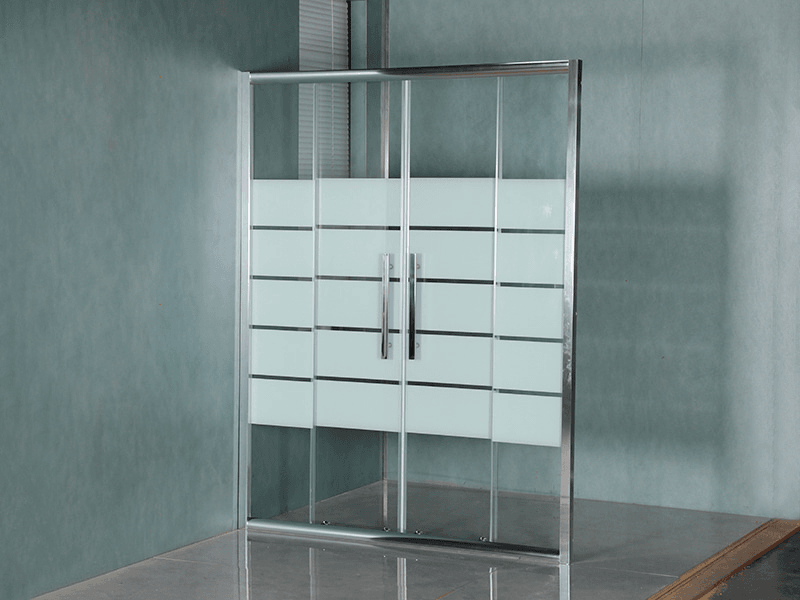
Product Consultation
Your email address will not be published. Required fields are marked *
Content
Privacy is the objection that stops most people from committing to a glass wall bathroom — and it is almost always based on the assumption that glass means transparent. It does not have to. There are at least five distinct ways to achieve full or partial privacy in a glass wall bathroom without compromising the light and openness that make the design worth pursuing.
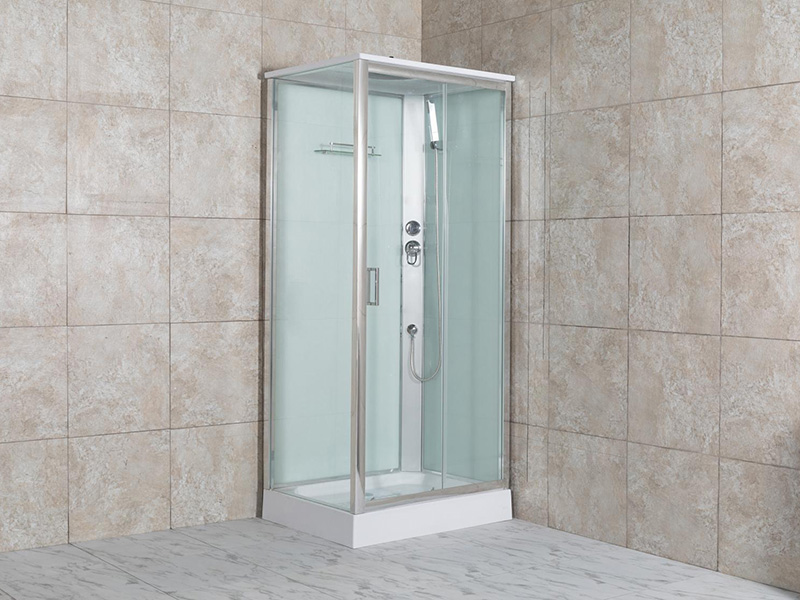
Frosted glass diffuses light while obscuring visibility — shapes are visible but detail is not. It is the most widely used privacy solution and works in any bathroom configuration. The frosting can be applied to the entire panel or limited to a mid-height band, leaving the upper portion clear to maintain the sense of openness. For a real-world example of how this approach is executed, enclosed shower cabins designed for privacy and comfort show how full enclosure with treated glass creates a genuinely private shower environment.
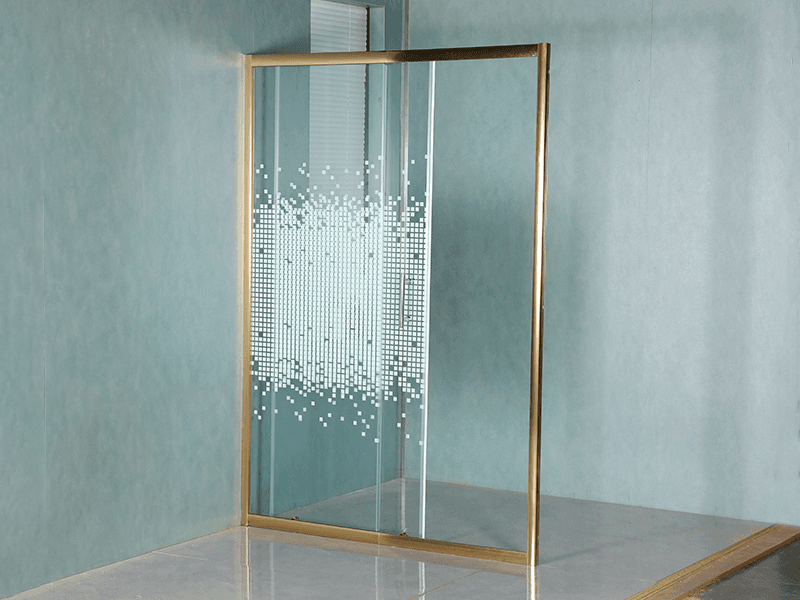
Screen-printed geometric or botanical patterns applied to tempered glass offer privacy with a decorative dimension. The opacity varies by pattern density — a tight geometric print provides near-total privacy, while a loose floral motif gives moderate screening. This option works particularly well as a bathroom partition rather than a full shower enclosure.
Electrochromic and PDLC smart glass panels switch from clear to opaque with a switch or app control. At clear, they transmit approximately 75% of available light; at opaque, visibility is reduced to the equivalent of heavy frosting. The technology adds cost — smart glass panels run two to four times the price of standard tempered options — but the flexibility is genuinely useful in shared family bathrooms or open-plan master suites.
Privacy is also a planning question, not just a glass question. A shower enclosure positioned against a wall rather than in the centre of the room — or a glass partition angled so it faces away from the door — can provide near-complete visual privacy with fully clear glass. Before upgrading the glass specification, it is worth reviewing whether the layout itself can do the work.
Adhesive privacy film applied to existing clear glass panels is the most cost-effective retrofit option. Modern films are available in frosted, mirrored, and patterned finishes, bond reliably to smooth glass surfaces, and can be removed without damage if preferences change. They do not match the longevity or clarity of factory-applied finishes but are a practical first step in an existing bathroom.
Water spots and soap residue on glass panels are the most common complaint about glass wall bathrooms — and they are almost entirely preventable with the right habits and the right products. The key insight is that glass walls do not require more cleaning than tiled walls; they just show residue more visibly, which creates the impression of higher maintenance.
The most effective cleaning regime is also the simplest: a quick wipe with a squeegee or microfibre cloth after every shower removes water before it dries and deposits minerals on the surface. This 20-second habit eliminates the need for weekly scrubbing in most households. For guidance on choosing the right cleaning products that will not damage the glass surface or the aluminium profiles, the article on how to choose the right cleaner for glass shower enclosures covers safe and effective options in detail.
Many tempered glass panels for bathroom use are available with a factory-applied hydrophobic coating — sometimes called easy-clean, nano-coating, or anti-limescale treatment. These coatings cause water to bead and run off the surface rather than spreading and drying in place. In hard water areas, an anti-limescale coating reduces cleaning frequency by an estimated 60–70% compared to uncoated glass. It is worth specifying this treatment at the point of purchase rather than trying to apply aftermarket products to uncoated glass.
Tempered glass is substantially stronger than standard float glass — approximately four to five times more resistant to impact — but it is not indestructible. Understanding how it behaves when damaged helps you respond appropriately without unnecessary expense.
Small surface scratches from abrasive cleaning are cosmetic rather than structural. They can be reduced with a glass polishing compound but not fully eliminated. If scratching is limited to one panel, replacement of that panel alone is usually straightforward if the original product is still in production.
Tempered glass does not crack in the conventional sense. When it fails, it shatters completely into small, rounded granules — a safety feature built into the tempering process. This means a damaged panel gives little warning before full failure, which is why knowing what to do if your shower screen is cracked or chipped matters. Any chip at the edge of a tempered glass panel — edges are the structural weak point — should be taken seriously. Even a small nick creates a stress concentration that can trigger spontaneous shattering, often days or weeks after the initial damage occurs.
The correct response to edge damage is panel replacement rather than repair. Do not attempt to fill chips with sealant — this does not restore structural integrity and creates a false sense of safety.
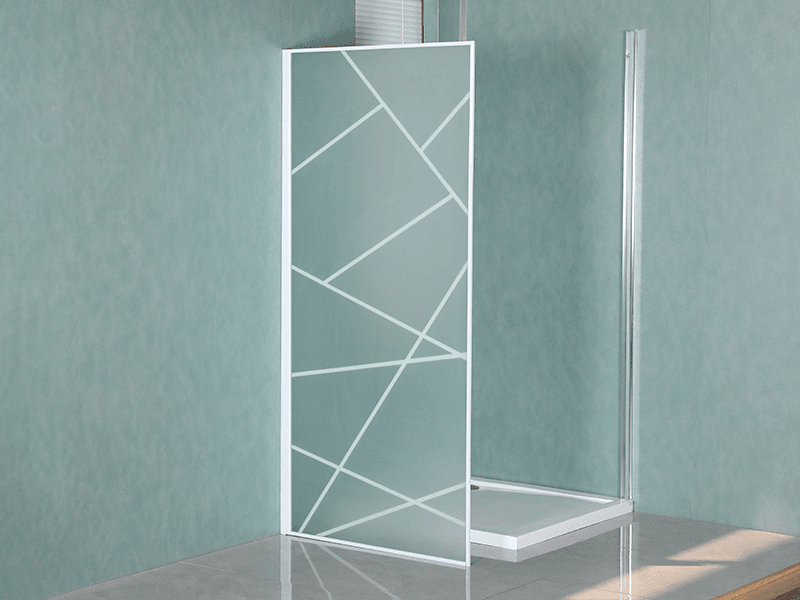
The frame configuration is the single most consequential product decision in a glass wall bathroom project. It affects cost, installation complexity, visual outcome, and long-term maintenance.
| Type | Glass Thickness | Visual Weight | Installation | Relative Cost | Best Suited To |
|---|---|---|---|---|---|
| Fully Framed | 5–6 mm | High | Straightforward | Low | Budget renovations, rentals |
| Semi-Frameless | 6–8 mm | Medium | Moderate | Mid | Most residential bathrooms |
| Fully Frameless | 8–10 mm | Minimal | Requires precision | High | High-spec en-suites, open-plan |
Under the International Residential Code, all glass within 60 inches of the shower or bath floor must meet safety glazing standards regardless of frame type — a detail worth confirming with your supplier before purchase. The safety glazing requirements for bathroom wet zones outline exactly which standards apply and how to verify compliance on the product you are buying.
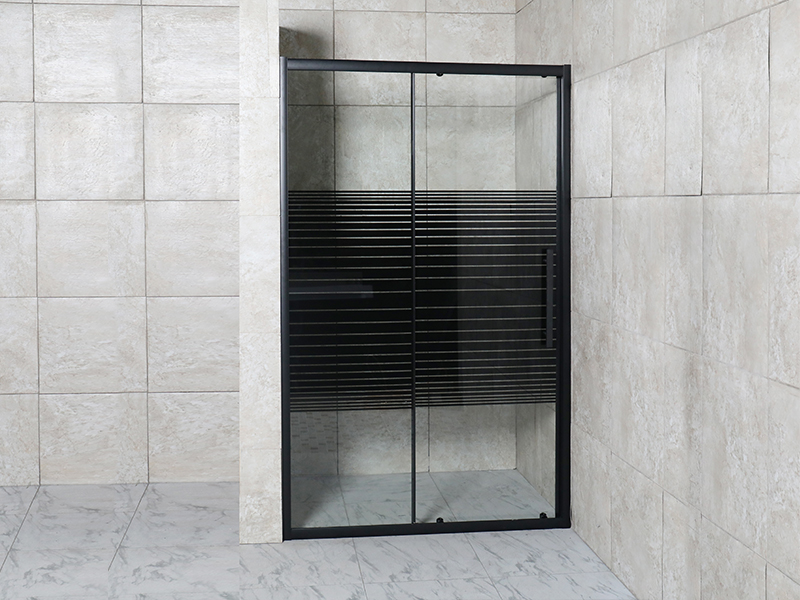
A glass wall bathroom works best when the glass reads as part of the room rather than an addition to it. That means thinking about how it relates to the bathtub, the vanity, the mirror, and the floor finish.
A freestanding bath positioned against — or visible through — a glass wall becomes a visual centrepiece. The glass amplifies the tub rather than competing with it. Clear glass works best here; frosted glass partially obscures the sculptural quality that makes a freestanding bath worth having. Keep the floor continuous across the glass line to reinforce the sense that the two zones belong to the same space.
The profile finish on the glass enclosure should align with the finish on tap fittings and mirror frames. Chrome profiles pair cleanly with chrome taps and a backlit LED mirror; matt black profiles suit brushed brass or matte black fixtures and a frameless or black-framed mirror. Mixing metallic finishes across the same room tends to read as unintentional rather than eclectic.
Large-format tiles — 600×600 mm or larger — behind and around a glass wall enclosure extend the horizontal lines and reinforce the openness the glass creates. Busy mosaic patterns or heavily veined stone can compete with the glass and produce a cluttered effect. Neutral, large-format tiles or solid-surface wall panels behind the glass are the most consistently successful backdrop.
Most problems with glass wall bathroom installations — panels that do not fit, frames that clash with existing fittings, glass that does not provide the expected privacy — originate in the buying stage, not the installation stage. A short checklist before purchasing saves significant rework.
For a full overview of glass wall products across every configuration — framed, semi-frameless, sliding, pivot, and walk-in — the complete range of bathroom shower enclosures provides a structured starting point with multiple glass finish, profile colour, and size options.
Bathroom with Glass Walls: Design Ideas and Planning Guide
Design on Glass Wall: Techniques, Patterns & Bathroom Style Guide 2026
Your email address will not be published. Required fields are marked *

 Tel: +86 13967167585
 E-mail: [email protected]
Copyright 2023 Anhui D-MAN Smart Home Co., Ltd. All Rights Reserved Shower Enclosures Manufacturers Shower Room Design Custom
