


 Français
 عربى
عربى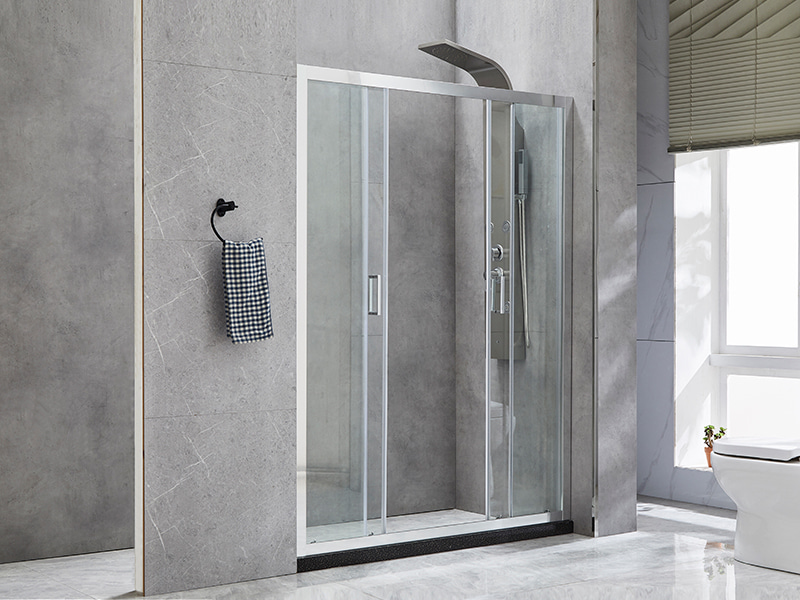
Product Consultation
Your email address will not be published. Required fields are marked *
Content
Bathroom design in 2026 has made a decisive shift. Heavy tiled partitions and opaque shower curtains are giving way to glass walls that do far more than divide space — they define it. Across hospitality, residential, and commercial renovation projects, the shower enclosure has become one of the most deliberate design decisions in the entire room.
Much of that shift is driven by what can now be done on the glass itself. Advances in printing and surface treatment technology mean that a sheet of tempered glass is no longer just transparent or frosted — it can carry geometric grids, botanical motifs, abstract gradients, or subtle texture patterns that turn the shower wall into an architectural statement. The glass surface has become a canvas, and designers are using it.
For homeowners and specifiers weighing their options, understanding the techniques behind decorative glass walls is the first step toward making a choice that holds up aesthetically and practically for years.
Not all decorative glass is made the same way. Each technique produces a distinct visual result, a different level of privacy, and different maintenance requirements. These are the four methods you'll encounter most often:
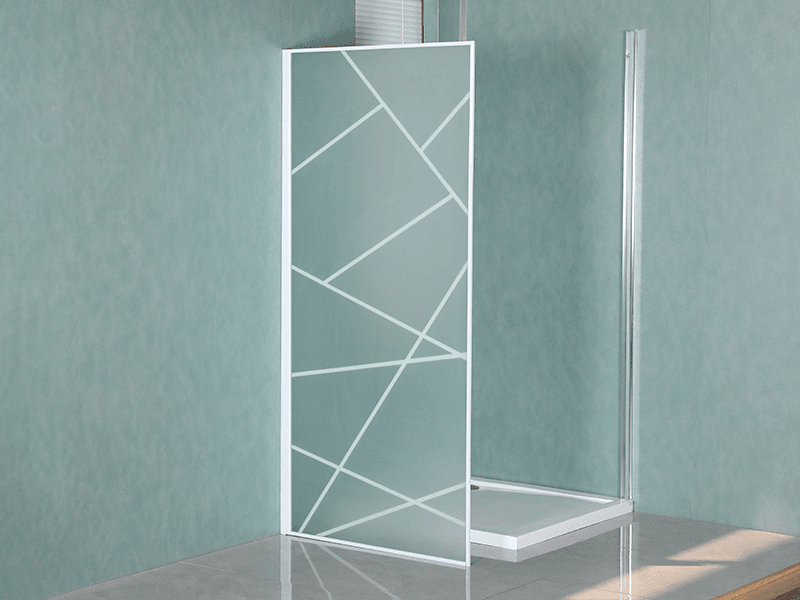
A ceramic glaze is applied to the glass surface through a mesh screen, then fused permanently during the tempering process. The result is a pattern that sits within the glass structure itself — it cannot be scratched off, peeled, or worn away. Screen-printed designs are typically high-contrast: bold geometric lines, repeating tile motifs, or structured border patterns. Because the glaze partially blocks light, these panels offer meaningful privacy in the printed zones while clear areas remain fully transparent. The patterned and printed glass bath shower screens using this method are among the most durable decorative options available.
Fine abrasive particles are blasted against the glass surface under pressure, creating a matte, frosted effect. The depth and opacity of the finish can be controlled precisely, allowing designers to achieve anything from a faint texture to near-complete opacity. Sandblasting is well-suited to custom work: a design can be masked so that only specific areas are treated, leaving sharp-edged clear zones alongside frosted ones. The tactile surface that results adds dimension to the glass that purely printed panels cannot replicate.
Chemical etching uses hydrofluoric acid to dissolve the glass surface selectively, producing a smooth satin finish with a soft, even diffusion of light. Unlike sandblasting, which can feel slightly rough to the touch, acid-etched glass has a silky quality. The process is used to create delicate gradient effects and fine-line patterns. It tends to appear in higher-end applications where a refined, understated aesthetic is the goal.
The newest of the four, digital printing applies ink directly onto the glass surface using large-format UV printing technology. It supports full-color images, photographic patterns, and complex gradients that screen printing cannot achieve. Mosaic tile effects, watercolor washes, and custom artwork can all be rendered with precision. Digital-print glass is increasingly popular in feature walls and accent panels where visual impact is the priority.
Pattern selection is where most design decisions either succeed or fall apart. Two variables matter most: the motif type and the coverage ratio — how much of the glass surface the design occupies.
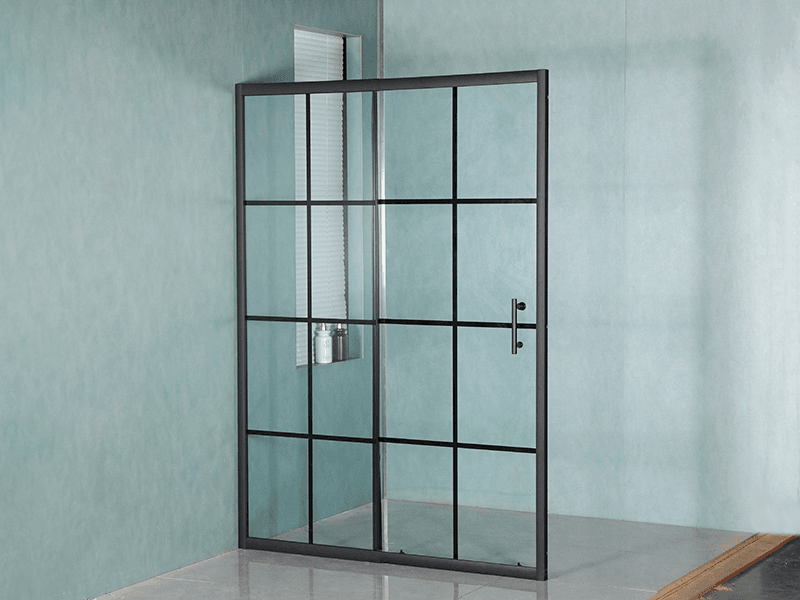
Geometric patterns — grids, diamonds, linear stripes — are the most versatile. They read as architectural rather than decorative, which means they rarely clash with existing tile work or hardware. A black grid printed on clear tempered glass, for example, references the conservatory-style shower trend that has dominated bathroom design in 2026, without requiring expensive structural work. These work especially well in the sliding shower enclosures with decorative glass options where the pattern becomes part of the door's visual identity.
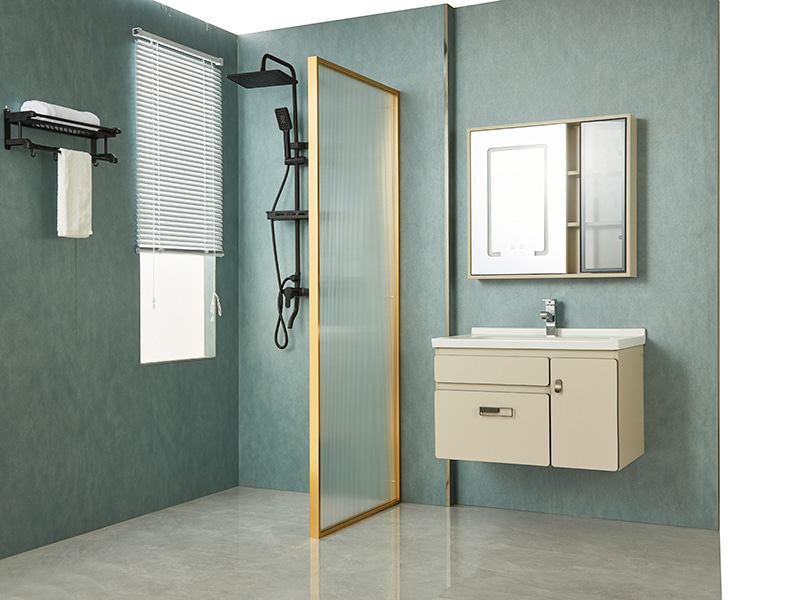
Natural motifs — bamboo, botanical leaves, wave forms, abstract pebble shapes — suit spa-oriented bathrooms where the design intention is calm and organic. These patterns tend to work best when applied at lower coverage, allowing the organic forms to breathe against a clear background rather than covering the full panel.
Coverage ratio has a direct effect on perceived space. A full-coverage frosted or printed panel reads as a wall; a panel with 20–40% print coverage still transmits light and visual depth. For smaller bathrooms, keeping print coverage below 50% and concentrating the design at the lower half of the panel — where privacy matters most — preserves the sense of openness that makes glass enclosures valuable in the first place.
Glass wall design in the bathroom ultimately serves two competing needs: privacy and light. The mistake most buyers make is treating these as mutually exclusive. Decorative glass techniques exist precisely to serve both at once.
A lower-zone frosted band — typically covering the bottom 900–1200 mm of the panel — provides privacy at eye level when seated or showering, while leaving the upper portion clear to allow light transmission and visual connection with the rest of the room. This approach is well-established in commercial hotel design and increasingly adopted in residential applications.
Printed bands work similarly. A screen-printed stripe or pattern concentrated in the mid-section of the glass creates a privacy screen without the heavy, closed-off feel of a fully opaque panel. Walk-in shower enclosures that pair with glass wall designs benefit particularly from this approach — the open entry configuration means privacy depends entirely on the glass treatment rather than a door, making the design choice both functional and aesthetic.
For rooms with limited natural light, the rule of thumb is to keep glass surfaces as open as possible. Tinted glass and high-coverage prints absorb and scatter light; in a north-facing bathroom, they can make a space feel significantly darker than expected. In those conditions, a narrow printed border or a single frosted panel at the entry point achieves the necessary privacy without sacrificing the room's brightness.
Decorative glass works best when it reinforces the room's existing design language rather than competing with it. Here is how the main residential bathroom styles align with different glass design approaches:
Clear or ultra-clear low-iron glass with no print is the default — but a fine geometric grid or a single frosted stripe at waist height adds definition without decoration. Hardware in matte black or brushed nickel. The opening shower enclosures for modern bathroom layouts suit this style best, where the pivot or hinged door reads as a clean architectural element.
Soft sandblasted panels in warm white-grey tones work well here. Avoid high-contrast prints; the aesthetic rewards subtlety. Textured glass — aquatex or linear ribbed surfaces — adds tactile interest without visual noise.
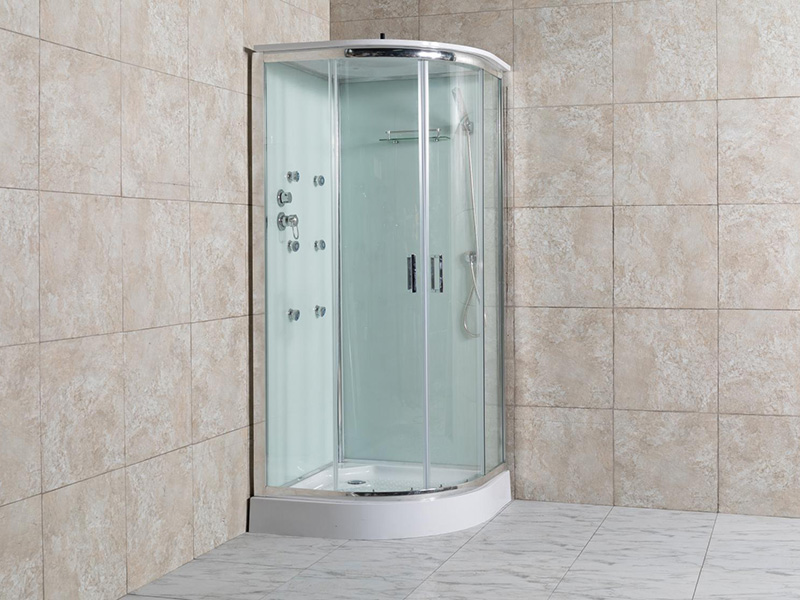
Bamboo and reed motifs in screen print, or deep-acid-etched botanical patterns, complement natural stone and timber finishes. Lower coverage prints (under 30%) paired with dark frame profiles create the restrained, considered quality this style demands. Enclosed shower cabins with full glass wall design are particularly well-matched to this aesthetic — the defined spatial boundary mirrors the structure of a traditional bathhouse.
Full-coverage digital print — marble vein patterns, large-scale florals, or metallic gradients — makes the shower the room's focal point. Pair with matching tile work and integrated lighting to reinforce the effect. This approach requires confident commitment; partial execution tends to read as unfinished.
Decorative glass requires slightly different care than clear tempered glass, and the specific requirements vary by technique. Screen-printed and acid-etched surfaces are permanent and structurally durable, but their textured or matte surfaces can trap soap residue and mineral deposits more readily than smooth clear glass.
For printed panels, avoid abrasive cleaners or scouring pads — these can dull the glaze surface over time even though the print itself is embedded in the glass. A diluted white vinegar solution or a pH-neutral glass cleaner applied with a soft microfibre cloth removes the majority of soap scum and hard water marks without risk. For sandblasted or acid-etched surfaces, the same approach applies, with the additional recommendation to dry the surface after cleaning rather than allowing water to air-dry and leave mineral deposits in the textured surface.
Anti-scale coatings applied at the time of installation are worth the investment on decorative glass — they significantly reduce the frequency of deep cleaning required. For a full guide on choosing the right cleaning products and methods for your enclosure, the advice on how to clean and maintain glass shower enclosure panels covers the key dos and don'ts in detail.
One final note: decorative glass panels should always be inspected at the frame and seal points annually. The glass surface may be durable, but the silicone seals that hold the panel in place are subject to mold growth and degradation in high-humidity environments. Replacing seals proactively — typically every three to five years — protects both the glass design and the waterproofing integrity of the enclosure.
Glass Wall Bathroom: Privacy, Maintenance and Buying Tips
How to Tell If Glass Is Tempered: Differences, Tests & What to Buy
Your email address will not be published. Required fields are marked *

 Tel: +86 13967167585
 E-mail: [email protected]
Copyright 2023 Anhui D-MAN Smart Home Co., Ltd. All Rights Reserved Shower Enclosures Manufacturers Shower Room Design Custom
