


 Français
 عربى
عربى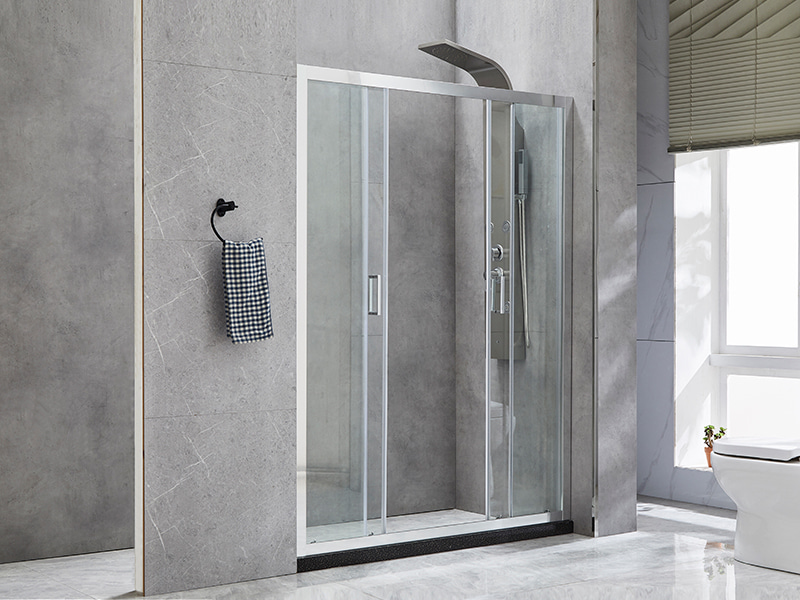
Product Consultation
Your email address will not be published. Required fields are marked *
Content
Glass walls do something tiled walls simply cannot: they let light travel. A bathroom fitted with glass walls — whether around the shower, as a partition, or across an entire elevation — immediately feels larger, brighter, and more open than its square footage suggests. Studies in residential design consistently show that perceived spaciousness ranks as the top priority for bathroom renovations, and glass walls deliver that effect without structural changes or added square footage.
The functional case is just as strong. Glass repels moisture better than grout joints, is impervious to the mould that colonises painted drywall, and — when properly specified — is safer than most people assume. A bathroom with glass walls is not a luxury reserved for hotel suites. With the right product choices, it is a practical, durable upgrade that works in homes of every size.
Not every glass wall bathroom looks the same. The design approach depends on which zone you are working with, how much privacy you need, and the overall layout of the room.
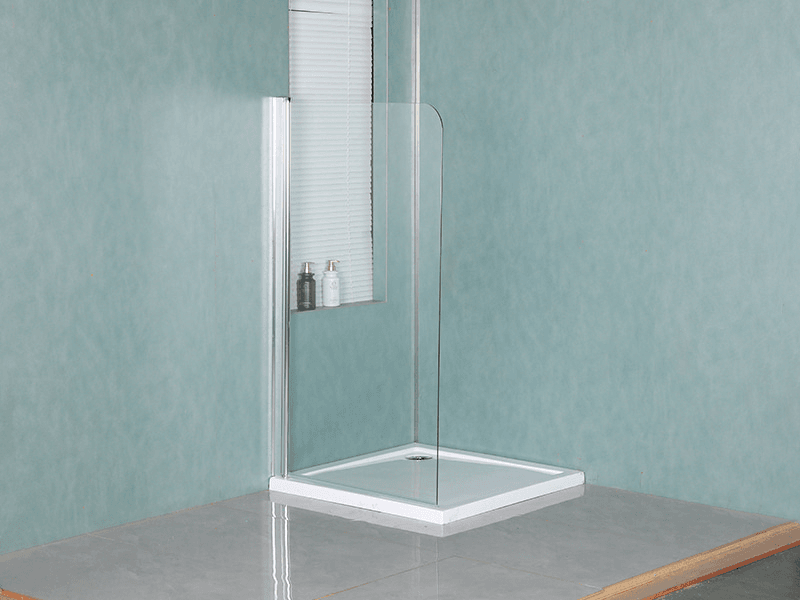
The most common application is enclosing the shower area entirely in glass. A frameless or semi-frameless enclosure on three or four sides creates a defined wet zone while keeping the rest of the bathroom visually connected. This approach works particularly well in open-plan bathroom layouts where the shower is visible from the main bedroom — the glass wall contains water without creating a visual barrier. Frameless shower enclosures using 8–10 mm toughened glass panels are currently the fastest-growing segment of the bathroom products market, reflecting a broader shift toward minimalist wet room aesthetics. Explore the full range of walk-in shower enclosures with tempered glass panels to see how this approach translates into real product options.
A single glass panel or sliding screen dividing the shower from the vanity area — or separating a freestanding bath from the rest of the room — gives you spatial definition without a solid wall. This is especially effective in narrow bathrooms where a full wall would make the space feel cramped. Sliding shower enclosure options for modern bathrooms offer a particularly space-efficient version of this, since the door panel requires no swing clearance.
In contemporary and high-end residential projects, an entire wall is sometimes glazed — connecting the bathroom interior to a private garden, a green wall, or an adjacent dressing area. This is the most dramatic application and the one that requires the most planning, particularly around privacy and ventilation. It is best suited to ground-floor bathrooms with a controlled external view, or interior-facing installations where the adjacent space is a walk-in wardrobe rather than a public room.
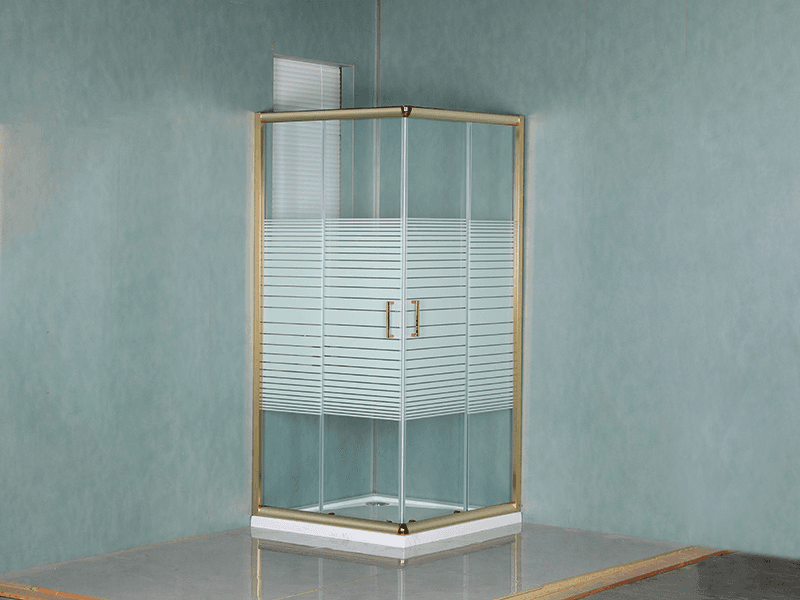
Choosing the right glass finish is where most bathroom glass wall projects either succeed or fall flat. The decision affects privacy, light transmission, cleaning effort, and the overall visual character of the room.
| Glass Type | Privacy Level | Light Transmission | Best Used For | Maintenance |
|---|---|---|---|---|
| Clear Tempered | None | Maximum | En-suite showers, feature walls | Watermarks visible; needs regular wiping |
| Frosted / Sandblasted | High | Good (diffused) | Family bathrooms, shared spaces | Etched surface traps soap; needs careful cleaning |
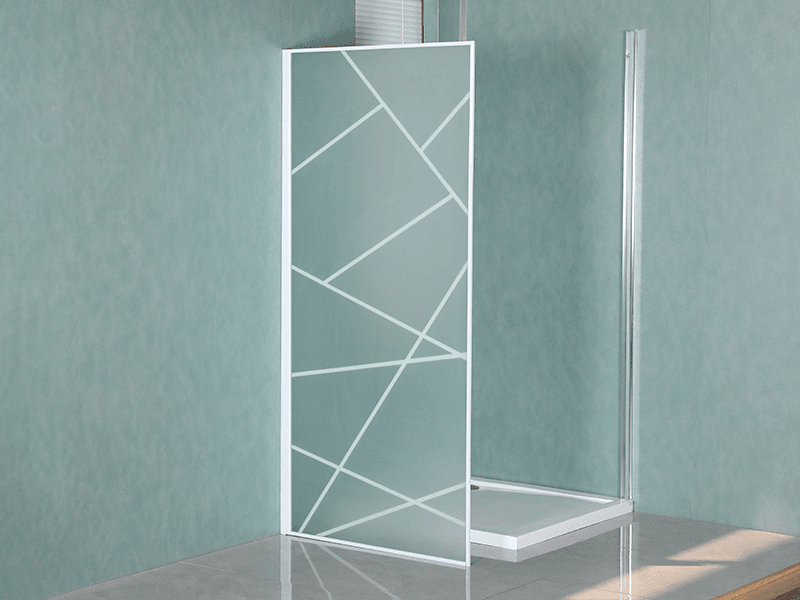
| Textured / Patterned | Medium–High | Good | Decorative partitions, bath screens | Pattern recesses collect residue |
| Grey / Tinted | Low–Medium | Moderate | Contemporary dark-palette bathrooms | Similar to clear; hides watermarks better |
| Smart / Switchable | Full (on demand) | Maximum (clear mode) | High-spec en-suites, master bathrooms | Easy; requires power supply installation |
For most residential bathrooms, clear or grey tinted tempered glass paired with a printed or frosted band at mid-height offers the best balance of light, privacy, and easy maintenance. Bath shower screens with this treatment are widely available and straightforward to install. Browse bath shower screens in clear and frosted tempered glass to compare finish options side by side.
Glass in a bathroom is classed as a hazardous location under residential building codes in most countries, and for good reason — wet floors and hard surfaces create exactly the conditions where a person might fall into a glass panel. This is not a reason to avoid glass walls; it is a reason to specify them correctly.
Under the International Residential Code (IRC), all glazing within 60 inches above the floor and within 60 inches horizontally of a shower or bath edge must meet safety glazing standards — specifically CPSC 16 CFR 1201 Category II or ANSI Z97.1 Class A. In practice, these standards require the glass to either withstand a significant impact without collapsing or to shatter into small, blunt fragments rather than sharp shards. Tempered glass satisfies this by design, breaking into rounded granules rather than knife-edged splinters. For a detailed breakdown of how these codes apply to different bathroom configurations, the authoritative guide to safety glazing requirements in wet spaces covers each scenario clearly.
When purchasing, look for glass panels that carry a manufacturer's etched mark in the corner confirming compliance. Any reputable shower enclosure or glass wall product manufactured for bathroom use will carry this certification — if it does not, that is a reason to look elsewhere.
A smaller bathroom actually benefits more from glass walls than a large one does. Solid partitions in a compact space create visual dead ends; glass allows the eye to travel through and beyond them, making the room feel two to three times larger than it measures.
The most effective approach for small bathrooms is a walk-in or corner glass enclosure that replaces a traditional curtain-and-rail shower. By removing the curtain and the visual weight it carries, you open up a significant portion of the room's visual field. A frameless or minimal-frame enclosure maximises this effect — the thinner the visible hardware, the more the glass reads as open space rather than structure.
A few practical points for tight spaces:
The market for bathroom glass wall products ranges from budget-grade framed enclosures to bespoke frameless installations. For most renovation projects, the decision comes down to three variables: frame type, glass thickness, and profile finish.
Frame type determines both the visual weight of the installation and the price point. Fully framed enclosures are the most affordable and easiest to install; semi-frameless options (frame on fixed panels only, frameless on the door) offer a cleaner look at a moderate price; fully frameless installations achieve the most minimal aesthetic but require thicker glass (typically 10 mm) and heavier-duty fixings.
Glass thickness of 5–6 mm is standard for framed enclosures, where the frame carries the structural load. Frameless designs need 8–10 mm to achieve adequate rigidity without frame support. Thicker glass also feels more solid underfoot and tends to suppress the hollow sound that thinner panels produce when knocked.
Profile finish — chrome, matt black, brushed gold, or white — has no effect on performance but a significant effect on how the installation integrates with the rest of the bathroom. Matt black profiles have grown rapidly in popularity over the past five years and pair well with both monochrome and warm-toned bathroom palettes.
For a complete overview of available configurations across all three variables, the full shower enclosure solutions for complete glass wall bathrooms range covers framed, semi-frameless, and fully frameless options with a choice of glass finishes and profile colours.
Common Bathroom Design Trends 2026: What's Changing and Why It Matters
Glass Wall Bathroom: Privacy, Maintenance and Buying Tips
Your email address will not be published. Required fields are marked *

 Tel: +86 13967167585
 E-mail: [email protected]
Copyright 2023 Anhui D-MAN Smart Home Co., Ltd. All Rights Reserved Shower Enclosures Manufacturers Shower Room Design Custom
