


 Français
 عربى
عربى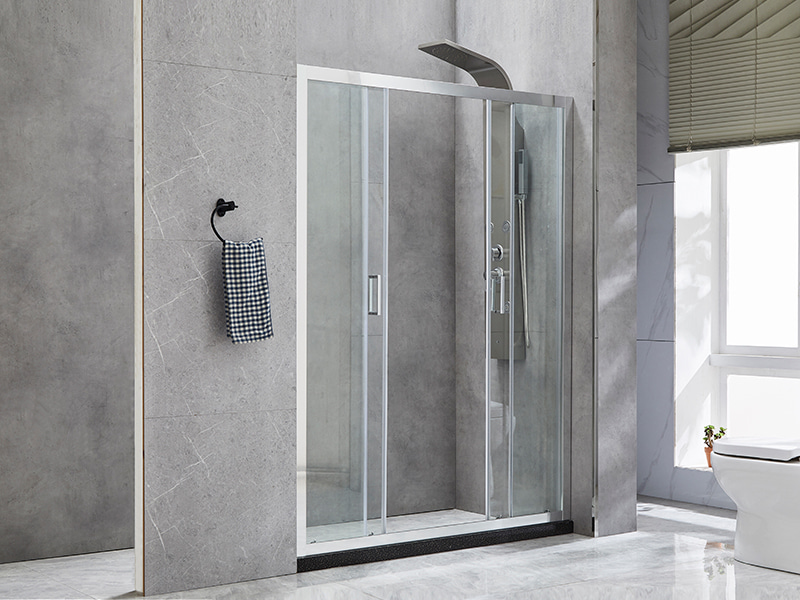
Product Consultation
Your email address will not be published. Required fields are marked *
Why This Question Matters More Than You Think
Glass looks the same regardless of how it was manufactured. A tempered panel and a standard annealed panel can sit side by side in a showroom and appear completely identical—same clarity, same thickness, same finish. Yet the difference between them, in a bathroom or any high-contact environment, is the difference between glass that shatters into dull, pea-sized fragments and glass that breaks into long, razor-edged shards.
For anyone purchasing tempered glass shower enclosures for bathrooms, specifying glazing for a renovation, or simply trying to verify what is already installed, knowing how to identify tempered glass is a practical safety skill—not a technicality. This article covers both questions together: what makes tempered glass different from regular glass, and exactly how to tell them apart.
Content
Both types begin as the same raw material—silica sand, soda ash, and limestone fused into flat sheets. The divergence happens in post-production treatment, and that single difference changes almost every performance characteristic that matters.
Manufacturing process. Regular annealed glass is simply cooled slowly after forming, which leaves the internal structure in a relaxed, uniform state. Tempered glass goes through a secondary process: it is reheated to approximately 620–680°C and then rapidly quenched with blasts of cool air. This rapid cooling compresses the outer surfaces while the interior remains in tension, locking in a state of pre-stress that makes the finished pane dramatically more resistant to impact and thermal shock.
Strength. The tempering process produces glass that is roughly four to five times stronger than annealed glass of the same thickness. A tempered pane can withstand the kind of accidental impact—a slipping body against a shower screen, a falling object against a glass door—that would cleanly crack a standard pane. If your shower screen has ever cracked unexpectedly, understanding the glass type involved matters for replacement decisions. what to do if your shower screen cracks or chips depends heavily on what type of glass you are working with.
Break pattern. This is the most consequential difference. When tempered glass fails, the stored surface compression causes it to fragment instantly into small, blunt granules with rounded edges. These fragments can still cause bruising and minor cuts, but they do not produce the long, knife-like shards that annealed glass generates. Regular glass breaks along stress fracture lines into large, irregular pieces with extremely sharp edges—a significantly higher injury risk in confined, wet environments like shower cubicles.
Thermal resistance. Tempered glass tolerates rapid temperature changes far better than regular glass. Standard annealed glass is vulnerable to thermal shock—a sudden shift from cold to hot, or uneven heating across a pane, can cause spontaneous cracking. Tempered glass handles the steam, hot water contact, and temperature cycling inherent to bathroom use without the same risk.
Post-production limitations. One practical constraint: tempered glass cannot be cut, drilled, or shaped after the tempering process. Any attempt to score or cut a tempered pane causes it to shatter completely. All sizing, drilling, and edge work must be done before tempering. This is why verifying glass type before attempting any modification is essential—and why standard annealed glass, despite its lower safety profile, is sometimes encountered in renovation contexts where custom cutting was required on-site.
No single test is conclusive in every situation. The most reliable approach combines two or more of the methods below.
1. Look for the safety stamp or etching. The most definitive identifier. Tempered glass panels produced by reputable manufacturers carry a small permanent marking—usually etched or sandblasted into one corner—that includes the word "Tempered" or "Safety Glass," the manufacturer's name, and a reference to the applicable standard (such as ANSI Z97.1 or CPSC 16 CFR 1201). This stamp is applied before the glass leaves the factory and cannot be removed without damaging the surface. Examine all four corners closely, holding the glass at an angle to the light if the etching is faint.
2. Examine the edges. Run a fingertip carefully along the edge of the glass. Tempered glass undergoes sandblasting or polishing as part of the process, producing edges that feel smooth and slightly rounded. The edges of standard annealed glass that has been cut feel noticeably rougher and more abrasive by comparison. This test is most useful when you have both types available for direct comparison, and care is needed when handling untempered edges, which can cut skin easily.
3. Use polarized lenses. Hold a pair of polarized sunglasses—or view through a polarized phone screen—up to the glass while standing in natural light. Rotate the lens slightly. Tempered glass shows stress patterns: dark stripes, spots, or subtle iridescent distortion caused by the birefringence of the internally stressed material. Regular glass appears uniform and clear under the same test. This is one of the most accessible non-destructive tests available, and it works reliably on large panels like shower screens and glass doors.
4. Look for slight surface distortion. Because tempered glass is processed on roller conveyors inside a high-temperature oven, the contact points between the glass and the rollers can leave faint, evenly spaced surface irregularities—sometimes described as subtle waves or mild bow when viewed from a low angle. These imperfections are a normal byproduct of the tempering process and are often invisible in direct overhead light but become apparent when the glass is viewed obliquely against a uniform background. Regular glass, having not passed through the same roller system, typically shows no such patterning.
5. Listen to the tap. Tap the glass surface gently with a knuckle. Tempered glass tends to produce a cleaner, slightly higher-pitched ring compared to the duller, flatter sound of annealed glass. This test is subjective and works better as a supporting check than a standalone test—but combined with the polarized lens test or an edge inspection, it adds useful confirmation.
The certification stamp does more than confirm the glass type—it tells you which performance standard the product was manufactured and tested to meet. Two standards dominate architectural and bathroom applications in the United States and internationally.
ANSI Z97.1 is the American National Standards Institute specification for architectural glazing materials. It covers impact resistance, thermal shock capability, and fragmentation patterns. Glass bearing this mark has been tested to confirm it breaks in a manner that reduces injury risk and can withstand the mechanical stresses expected in architectural applications.
CPSC 16 CFR 1201 is a federal regulation administered by the Consumer Product Safety Commission, mandating safety glazing requirements for hazardous locations including shower enclosures, doors, and windows close to walking surfaces. The full text of this federal standard is publicly available through the Electronic Code of Federal Regulations: the official CPSC 16 CFR 1201 safety glazing regulation. Glass certified to Category II of this standard meets the higher impact threshold required for most architectural applications.
A stamp referencing either or both of these standards is a meaningful signal of compliance—not just a marketing label. The absence of any stamp does not automatically mean the glass is not tempered (some older or custom-fabricated pieces predate mandatory marking requirements), but it does mean the panel lacks third-party verified documentation of its safety performance. For commercial procurement and renovation projects, specifying certified and marked glass is the baseline for defensible compliance.
Building codes do not leave the use of safety glass to individual preference in high-risk locations. The International Building Code (IBC) Section 2406 defines hazardous glazing areas—spaces where human contact with glass is statistically likely—and mandates safety glazing in all of them. The list includes doors and panels within approximately 24 inches of a door edge, glazing adjacent to stairways and landings, handrails and guardrails, and all wet area enclosures.
Shower enclosures sit near the top of that list for a straightforward reason: they combine all the high-risk conditions simultaneously. Wet, slippery surfaces increase the likelihood of falling into the glass. Confined space means there is often no room to avoid contact. Steam and temperature cycling create thermal stress. And users are typically unclothed, with no clothing buffer between skin and glass. Using anything other than tempered glass in a shower enclosure is a code violation in most jurisdictions and an unnecessary safety risk in all of them.
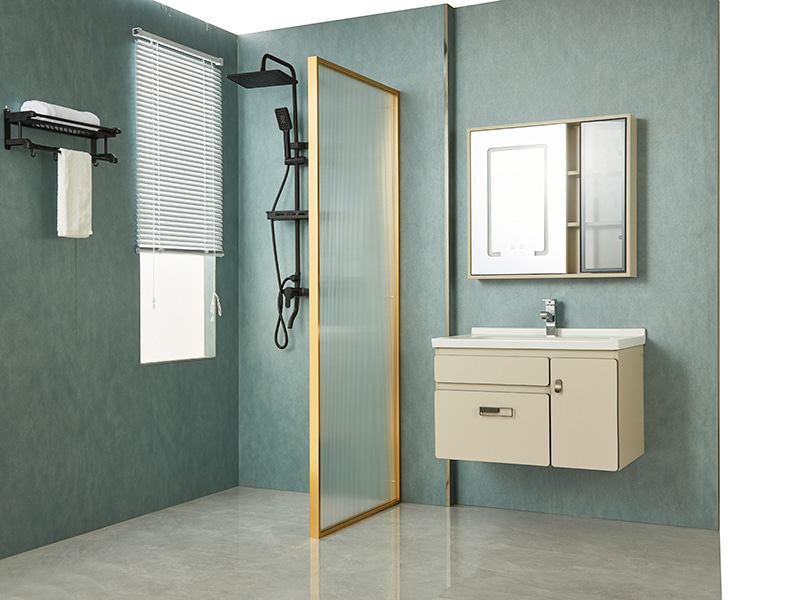
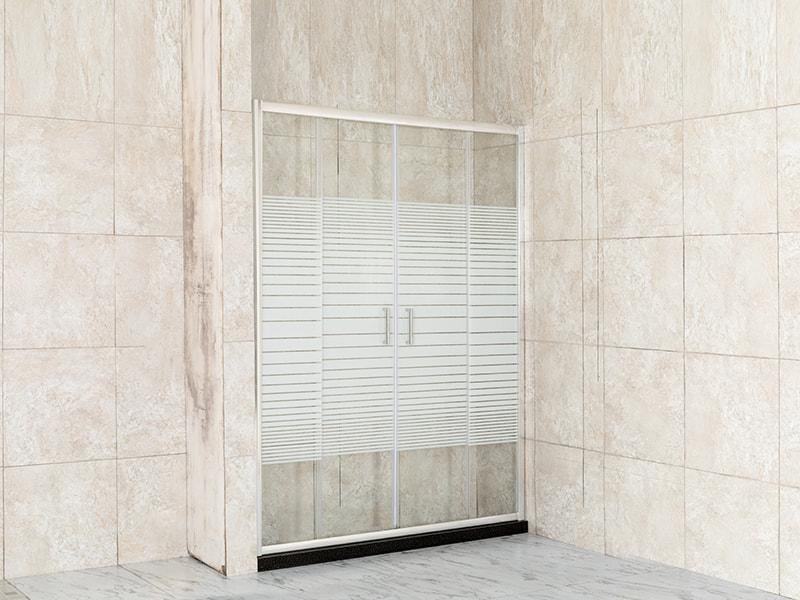
For sliding shower enclosure options with safety glass, the tempered requirement applies to both the door panels and the fixed side panels. Walk-in shower enclosure designs using tempered panels are particularly common in modern bathrooms because the open format—without a door frame to distribute impact loads—makes the structural strength of tempered glass even more relevant to safety.
When evaluating shower glass for purchase or specification, three checkpoints cover the essentials. First, confirm the glass carries a legible certification stamp referencing ANSI Z97.1 or CPSC 16 CFR 1201—ask the supplier for documentation if the marking is not visible on the sample. Second, check the glass thickness: most shower applications use 6 mm or 8 mm tempered glass, with 8 mm and above common in frameless and walk-in designs where the panel must bear its own structural load without frame support. Third, verify that all edge work, holes for hardware, and cutouts were completed before tempering—not after. Any drilling or cutting of tempered glass post-production will shatter the panel.
For bath shower screens with certified tempered glass, the combination of correct thickness, certified safety glazing, and properly finished edges is the complete specification baseline. Glass that meets all three criteria will perform safely across the full service life of the installation—through daily thermal cycling, occasional impact, and years of cleaning product exposure—without requiring early replacement or presenting a safety liability.
The visual similarity between tempered and regular glass is precisely why verification matters. The tests described above—stamp inspection, edge feel, polarized lens, surface distortion, and tap sound—take under two minutes combined and require no equipment beyond a pair of polarized sunglasses. For any glass in a bathroom, shower enclosure, or other wet area, that two-minute check is time well spent.
Design on Glass Wall: Techniques, Patterns & Bathroom Style Guide 2026
Shower Enclosure Types: Frame Styles, Door Operation & How to Choose
Your email address will not be published. Required fields are marked *

 Tel: +86 13967167585
 E-mail: [email protected]
Copyright 2023 Anhui D-MAN Smart Home Co., Ltd. All Rights Reserved Shower Enclosures Manufacturers Shower Room Design Custom
