


 Français
 عربى
عربى
Product Consultation
Your email address will not be published. Required fields are marked *
Content
A mirror does something no other piece of decor can: it doubles a room without adding a single square foot. Light that would otherwise die against a wall bounces back into the space, spreading across the room instead of pooling in one corner. That's the real mechanism behind "mirrors make a room feel bigger" — it isn't an illusion trick so much as basic physics, and it's why designers reach for a mirror before they reach for a lamp when a room feels flat or dim.
Beyond function, a well-chosen mirror behaves like art. It has a frame, a silhouette, a finish — every one of those choices signals a design direction the way a painting would, except a mirror also reflects whatever color palette and texture already exist in the room, tying the whole scheme together rather than competing with it.
The frame is where a mirror earns its personality. Frameless and thin-edged designs read as minimal and modern, disappearing into the wall so the reflection itself becomes the focal point. Metal frames — brass, black iron, chrome — lean more editorial, and they hold up well as anchor pieces above consoles or mantels. Wood frames soften a room and pair naturally with warmer, more textured interiors, while ornate or antique-style frames bring a collected, lived-in character that works particularly well in traditional or eclectic spaces.
Shape matters just as much as material. Round and curved mirrors ease the visual weight of a room full of hard edges and rectangular furniture, which is part of why they've become the default choice in minimalist and Scandinavian-influenced interiors. Rectangular and arched mirrors, on the other hand, tend to suit more classic or transitional rooms, especially when hung vertically to draw the eye upward and make ceilings feel taller.
Where a mirror hangs matters more than which mirror you buy. The single most reliable trick is positioning a mirror directly across from or beside a window, so it catches daylight throughout the day and redistributes it into the darker parts of the room. A mirror facing a blank wall, by contrast, mostly just reflects more blank wall — it looks fine but does none of the functional work.
In the living room, an oversized mirror above the sofa or fireplace works as a substitute for a large piece of art, especially in a space that otherwise feels visually empty. Entryways benefit from a mirror positioned at eye level near the door — practical for a last glance before heading out, and effective at making a narrow foyer feel less cramped. Bedrooms tend to favor softer, rounded mirrors near a dresser or in a reading corner, where the goal is calm rather than drama. Even kitchens have found a place for mirrored surfaces, most often as a reflective backsplash that brightens a work zone without needing extra lighting fixtures.
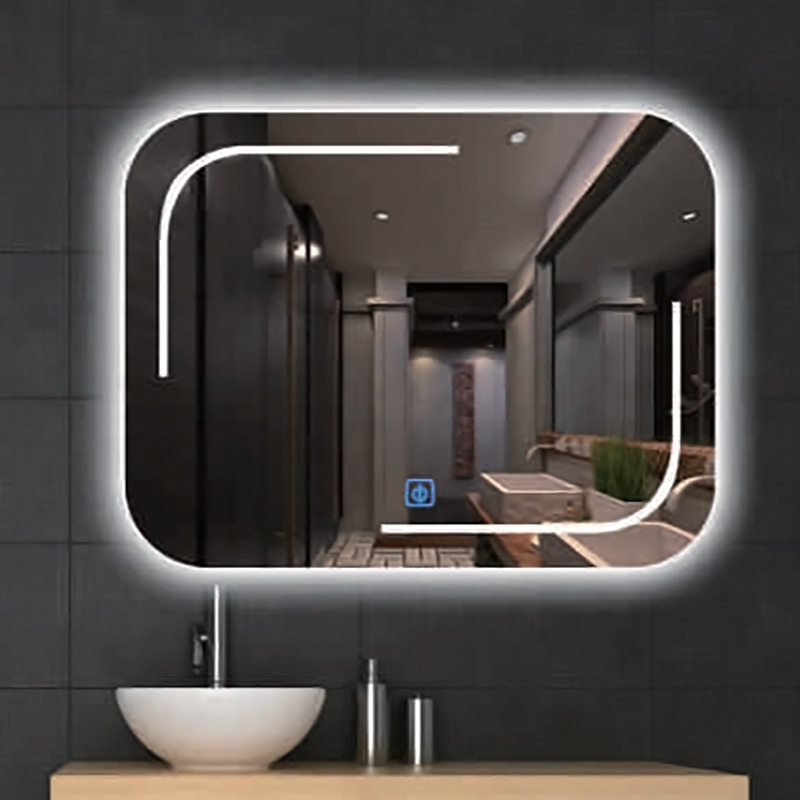
Nowhere does mirror design carry more daily weight than in the bathroom, where a mirror is used constantly and under close, task-focused lighting. This is where LED bathroom mirrors that combine illumination with reflective design earn their popularity — evenly distributed LED lighting around or behind the glass eliminates the harsh shadows that a single overhead fixture creates, which matters for everything from shaving to skincare routines. A neutral or slightly warm color temperature tends to read as the most flattering and the most accurate for grooming tasks, while anti-fog coatings keep the surface usable immediately after a hot shower.
Design-wise, a backlit or edge-lit mirror also does what any well-placed mirror does elsewhere in the home: it makes a small, often windowless bathroom feel brighter and larger, while doubling as a clean, architectural feature rather than a purely utilitarian fixture. For anyone weighing options, a full range of bathroom mirror styles for different design needs spans everything from simple frameless designs to fully integrated LED panels, so the choice can match both the bathroom's layout and its lighting demands.
For bathrooms where counter space is tight, a mirror cabinet solves two problems with one fixture. The reflective surface does the same visual work as a standalone mirror — bouncing light, adding depth — while the cavity behind it absorbs the toiletries, medications, and small essentials that would otherwise clutter the vanity. It's a particularly practical choice in smaller or shared bathrooms, where every inch of visible counter makes a noticeable difference to how organized the room feels.
Because bathrooms are inherently humid, the cabinet material behind the mirror matters as much as the glass itself. PVC bathroom cabinets built to handle humid environments resist the warping and swelling that can affect wood-based cabinetry over time, which makes them a common pairing behind mirror-front bathroom storage. Whether the goal is a fully integrated mirror cabinet or a separate mirror paired with nearby storage, the same design logic applies: let the mirror do the visual work of brightening the room, and let the cabinet quietly absorb everything else.
Your email address will not be published. Required fields are marked *

 Tel: +86 13967167585
 E-mail: [email protected]
Copyright 2023 Anhui D-MAN Smart Home Co., Ltd. All Rights Reserved Shower Enclosures Manufacturers Shower Room Design Custom
