


 Français
 عربى
عربى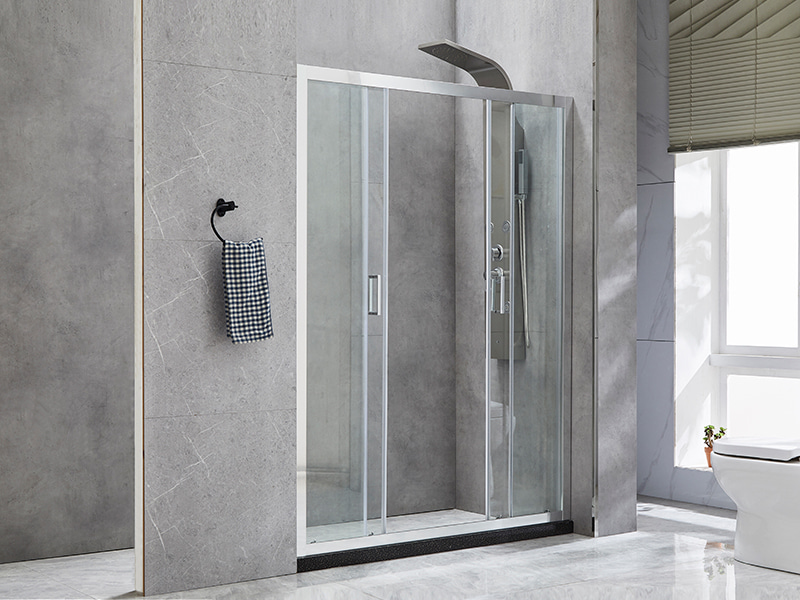
Product Consultation
Your email address will not be published. Required fields are marked *
Content
Glass has become one of the most sought-after materials for kitchen backsplashes — and for good reason. Its reflective surface bounces natural and artificial light around the room, making even a compact kitchen feel brighter and more open. Unlike porous materials such as natural stone or unsealed grout, glass is non-porous, which means it resists staining, mold, and bacteria. A simple wipe with a damp cloth is all that is typically needed to keep a glass backsplash looking pristine.
Glass backsplash tiles are also extraordinarily versatile. They are available in a wide spectrum of colors, shapes, finishes, and sizes — from small 1-inch mosaic chips to large-format panels that span entire walls behind a range or sink. This flexibility makes glass suitable for nearly every design style, from minimalist contemporary to bohemian eclectic.
One underappreciated advantage of glass is its ability to showcase the color beneath it. Because light passes through glass rather than being absorbed by it, the color of the adhesive, backer board, or grout behind the tile can influence the final appearance of your backsplash. This means careful installation matters — choosing the right thin-set mortar or mastic adhesive ensures that the true color of your glass tile comes through as intended.
Not all glass tiles are created equal. Understanding the different types will help you choose the right option for your kitchen's style, traffic level, and budget.
The rectangular subway format remains a perennial favorite, and glass versions add a luminous twist to a timeless shape. Glass subway tiles are available in glossy and matte finishes, as well as in a textured "beveled" profile that adds subtle depth and dimension. Standard sizes run from 2x4 inches to 3x12 inches, though elongated formats such as 1x6 are increasingly popular for their ability to create a sense of height when installed vertically.
Glass mosaic tiles — typically 1x1 inch or 1x2 inch chips mounted on a mesh backing — are one of the most versatile options available. Because they arrive pre-sheeted, installation is relatively straightforward and the spacing is pre-set for consistent grout lines. Mosaics can be used to create intricate patterns or abstract designs, and are a popular choice for decorative accent strips or full-wall feature installations behind a kitchen range. Iridescent and metallic glass mosaic finishes add a shifting, dimensional quality that changes with the light throughout the day.
For homeowners with sustainability in mind, recycled glass tiles offer both eco-friendly credentials and distinctive aesthetics. These tiles are manufactured from post-consumer glass — including reclaimed bottles, windows, and industrial glass — and are available in an array of colors and finishes. The slight variation in color and texture that results from the recycling process gives each tile a unique character, ensuring that no two installations look exactly alike.
Specialty glass products such as lava glass feature an undulating, textured surface that catches light at multiple angles, creating a dramatic, almost liquid visual effect. Iridescent glass tiles shift between multiple hues depending on the viewing angle and light source — a particularly effective choice in kitchens where artificial lighting and natural daylight alternate throughout the day. These tiles work well as an accent element or as a full backsplash in spaces designed around a bold, statement aesthetic.
For a truly seamless, grout-free look, large-format glass backsplash panels — sometimes spanning the full width of a kitchen wall — offer maximum visual impact with minimum maintenance. These panels are typically fabricated from tempered glass and can be back-painted to any custom color. Because there are no grout lines, cleaning is effortless. However, large panels require precise wall preparation and professional installation to avoid visible imperfections behind the glass.
Design trends for kitchen backsplashes in 2025 favor bold colors, rich textures, and personalized statements over the more restrained neutrals of the previous decade. Here are the glass backsplash ideas attracting the most attention from designers and homeowners this year.
Vibrant jewel-toned glass tiles in deep cobalt blue, teal, sage green, and emerald are among the most popular backsplash choices for 2025. When installed in a glossy glass format, these colors are intensified by the tile's reflective surface, creating a focal point that anchors the entire kitchen design. These rich hues pair particularly well with white or light gray cabinetry, where the backsplash becomes the primary source of color in an otherwise restrained palette.
Soft pastel tones — including mint green, lavender, pale blush, and baby blue — are making a strong comeback in glass tile form. These colors create a calm, inviting atmosphere in the kitchen without the visual intensity of deeper saturated hues. Pastel glass tiles work beautifully in cottagecore and Scandinavian-inspired interiors, and can be refreshed easily with accent décor if tastes change over time.
The arrangement of glass tiles is just as important as the tiles themselves. Herringbone layouts — where rectangular tiles are set at opposing 45-degree angles — create a dynamic sense of movement and are consistently ranked among the most popular backsplash patterns. Similarly, hexagonal, diamond, and chevron glass tile arrangements are gaining traction as homeowners seek to inject personality and architectural interest into their kitchens beyond the standard horizontal stacking of subway tile.
One of the strongest kitchen design trends for 2025 involves extending the backsplash material beyond the standard counter-to-cabinet zone and up onto the range hood itself. Covering the hood with the same glass tile as the backsplash creates a cohesive, immersive focal point that transforms the cooking area into a deliberate design statement. This approach works especially well with mosaic glass tiles, where the smaller tile format can wrap curves and angles more easily than large-format materials.
Combining glass with other materials — such as natural stone, metallic tile, or glazed ceramic — is an increasingly popular approach for achieving a layered, custom look. A common arrangement pairs a field of neutral glass subway tile with a horizontal band of metallic or patterned tile as an accent strip at eye level. The contrast between materials adds visual depth and allows for personalization without committing entirely to a bold or unusual material across the full surface.
| Material | Maintenance | Light Reflection | Cost Range (per sq ft) |
|---|---|---|---|
| Glass Tile | Easy (non-porous) | High | $7 – $30+ |
| Ceramic / Porcelain | Easy to moderate | Low to moderate | $2 – $15 |
| Natural Stone | Requires sealing | Low | $10 – $50+ |
| Large Glass Panel | Easiest (no grout) | Very high | $25 – $75+ |
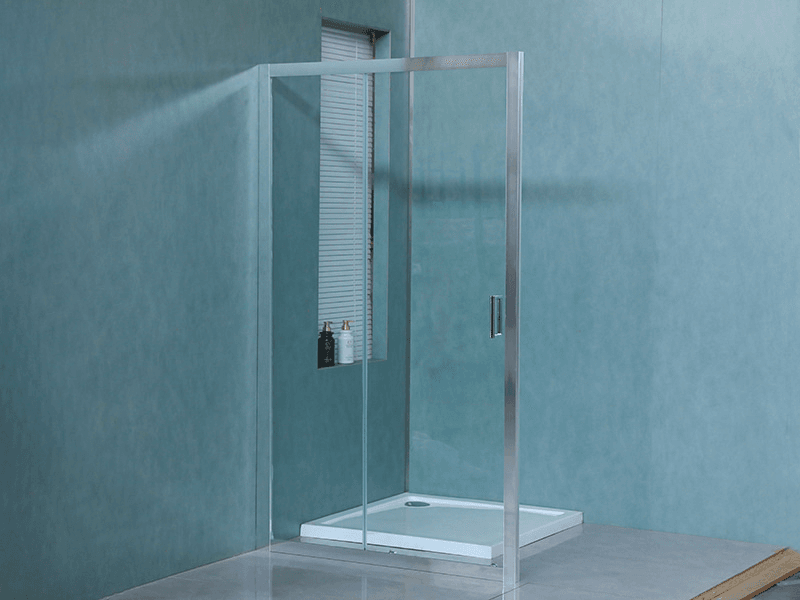
A single pane shower door refers to a shower enclosure design that uses one continuous piece of glass — either as a fixed panel or a hinged/pivoting door — to partially or fully close off the shower or bathtub opening. Unlike sliding bypass doors that use two overlapping glass panels in parallel tracks, a single pane design relies on a single sheet of glass that typically swings outward on hinges or pivots from a floor-to-ceiling mount.
Single pane shower doors are most closely associated with frameless and semi-frameless enclosure styles, where the absence of bulky aluminum framing allows the full surface area of the glass to be appreciated. A common configuration pairs a single hinged glass door with one adjacent fixed glass panel, creating an in-line enclosure that provides full coverage of the shower opening while maintaining a clean, uninterrupted sightline into the shower space.
Single pane shower screens — a related product — consist of a single fixed piece of glass attached to one wall of a walk-in shower, angled or straight, that deflects water spray without fully enclosing the space. These are a popular choice in European-style wet room designs where openness and ease of access are priorities.
Single pane shower doors are available across all three primary framing styles. Understanding how these differ helps narrow down the best choice for your bathroom's design, budget, and practical requirements.
Frameless shower doors have no metal frame around the perimeter of the glass. Instead, the glass panel is secured using heavy-duty hinges, clamps, and wall-mounted brackets. Because the glass must support itself without the structural reinforcement of a frame, frameless doors require thicker glass — typically 3/8 inch to 1/2 inch tempered safety glass. This thicker glass accounts for the higher cost of frameless installations, which generally range from $900 to over $2,000 depending on size, hardware, and installation complexity.
The defining advantage of a frameless single pane door is its visual transparency. With no frame interrupting the view, the door appears to float, creating a spa-like, open aesthetic that allows the tile work and fixtures inside the shower to remain fully visible. Frameless doors are also easier to clean than framed alternatives because there are no metal channels, tracks, or crevices where soap scum and mineral deposits can accumulate.
Semi-frameless doors combine elements of both frameless and framed designs. Typically, the fixed side panels carry some degree of framing for structural support, while the moving door panel itself remains frameless. The glass used is somewhat thinner than fully frameless versions — generally around 1/4 inch — and the overall cost is lower, often between $500 and $1,500. Semi-frameless doors offer a good balance of modern aesthetics and practical durability, making them a popular choice for homeowners who want a cleaner look than a fully framed door without the premium cost of going fully frameless.
Traditional framed shower doors feature aluminum channels around the full perimeter of both the door panel and any fixed panels. Because the frame provides rigidity and protects the edges of the glass, thinner glass — as thin as 5/32 inch — can be used, which brings the cost down to the $200 to $800 range. Framed doors are the most budget-friendly option and the easiest to self-install, but they have the most visual weight and can make a bathroom feel smaller and more dated. Metal tracks at the bottom can also collect grime and are more difficult to clean than frameless alternatives.
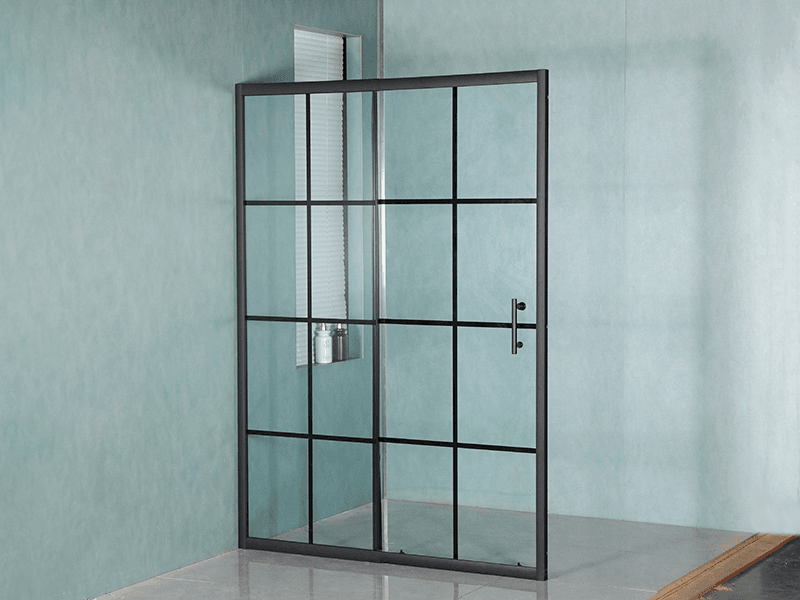
The type of glass used in a single pane shower door affects both its safety profile and its visual appearance. All shower doors must use either tempered or laminated safety glass — never standard annealed glass, which can break into large, sharp shards. Tempered glass is heat-treated to increase its strength and, when broken, shatters into small blunt pieces rather than dangerous fragments. Laminated glass contains a plastic interlayer that holds the glass together even when cracked.
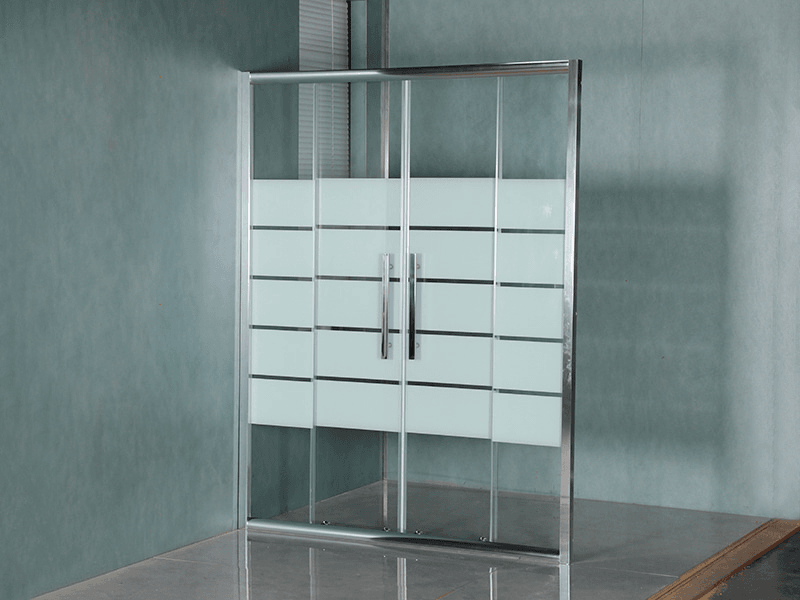
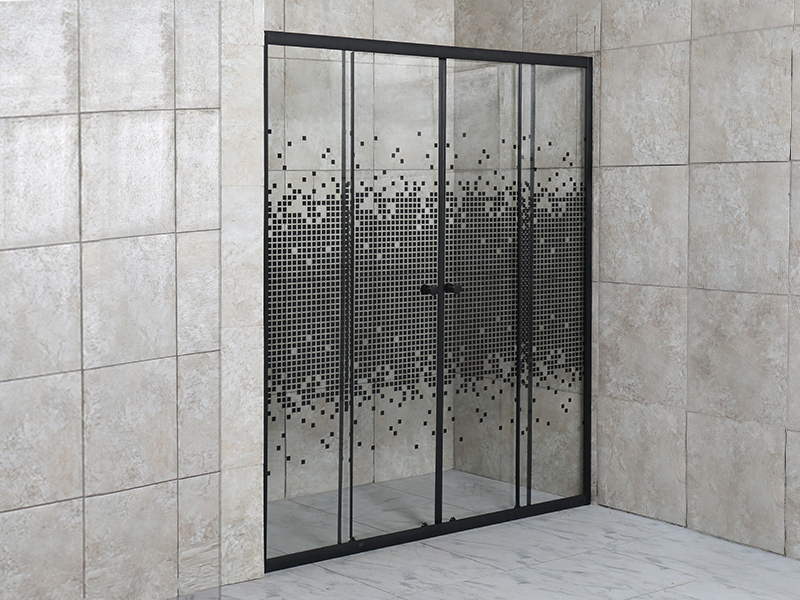
Beyond safety characteristics, homeowners can choose from several glass finishes:
Selecting the right single pane shower door involves balancing several practical and aesthetic considerations. The following factors should guide your decision:
In a smaller bathroom, a frameless single pane door maximizes the visual sense of space by eliminating visual barriers between the shower and the rest of the room. Pivot and swing doors require clearance in front of the shower — typically 24 to 36 inches — for the door to open fully. In bathrooms where floor space is limited, a single fixed pane shower screen (without a door) combined with a walk-in entry may be a more practical solution than a swinging door.
As a general guide: framed doors run from $200 to $800; semi-frameless options typically fall between $500 and $1,500; and fully frameless doors start at around $900 and can exceed $2,000 for custom sizes or premium hardware finishes. Installation labor adds to these costs, and frameless installations should always be performed by a professional to ensure proper alignment, structural integrity, and watertight sealing.
The metal hardware — hinges, handles, and clamps — on a single pane frameless shower door has an outsized visual impact because the glass itself is nearly invisible. Coordinating hardware finishes with the rest of the bathroom's fixtures (faucets, towel bars, light fittings) creates a cohesive, considered look. Current hardware finish trends favor brushed nickel, matte black, and champagne gold over the chrome finishes that dominated earlier decades.
Frameless single pane doors are the easiest to clean — a squeegee after each use and a weekly wipe-down with a glass cleaner typically keeps them in excellent condition. Semi-frameless doors require occasional attention to the framed edges. Fully framed doors demand the most cleaning effort, as water, soap, and minerals can accumulate in the aluminum channels. Applying a hydrophobic glass treatment (such as Rain-X or similar products) to the glass surface significantly reduces the effort required to maintain any type of shower door.
Many homeowners undertaking a full bathroom or open-plan renovation consider both a glass kitchen backsplash and a glass shower door as part of a unified design strategy. When chosen thoughtfully, glass elements in adjacent or connected spaces create a sense of visual continuity and reinforce a modern, light-filled aesthetic throughout the home.
Consider repeating accent colors from the kitchen backsplash tile in the bathroom — a glass backsplash in deep teal, for example, can be echoed in the grout color or wall tile of an adjacent master bathroom. Maintaining a consistent hardware finish across both spaces — matte black kitchen fixtures with matte black shower door hardware, for instance — reinforces the cohesion without requiring an exact match of materials or styles.
If you are working with an open-concept layout where the kitchen and main living areas are visible from the bathroom hallway, prioritizing glass elements that maximize light transmission — large-format clear glass panels for the shower door, and glossy glass subway tiles for the backsplash — will create the most harmonious result. The reflective quality of glass in both spaces amplifies available light and contributes to the sense of openness that defines contemporary home design.
Sliding Doors for Living Room & Shower Cubicle Measurements: Full Guide
Hotel Mirror Design Trends 2026: Smart LED, Frameless & Wellness-Driven Solutions for Hospitality
Your email address will not be published. Required fields are marked *

 Tel: +86 13967167585
 E-mail: [email protected]
Copyright 2023 Anhui D-MAN Smart Home Co., Ltd. All Rights Reserved Shower Enclosures Manufacturers Shower Room Design Custom
