


 Français
 عربى
عربى
Product Consultation
Your email address will not be published. Required fields are marked *
Content
In contemporary interior design, few elements carry the visual weight of a well-placed glass mirror. Beyond their obvious practical function, decorative glass mirrors have evolved into statement pieces capable of transforming the entire character of a room — amplifying natural light, adding perceived depth, and anchoring a design scheme with elegance or drama depending on the style chosen.
Nowhere is this dual role more pronounced than in the bathroom. As homeowners and hospitality designers alike invest more heavily in bathroom aesthetics, glass mirror decoration has become a primary design lever — one that delivers outsized visual impact relative to its footprint. From minimalist frameless panels above floating vanities to ornate backlit mirrors in luxury hotel suites, the bathroom mirror market has expanded dramatically in both scope and sophistication. Explore D-MAN's full bathroom mirror collection to see how decorative and functional design can work hand in hand.
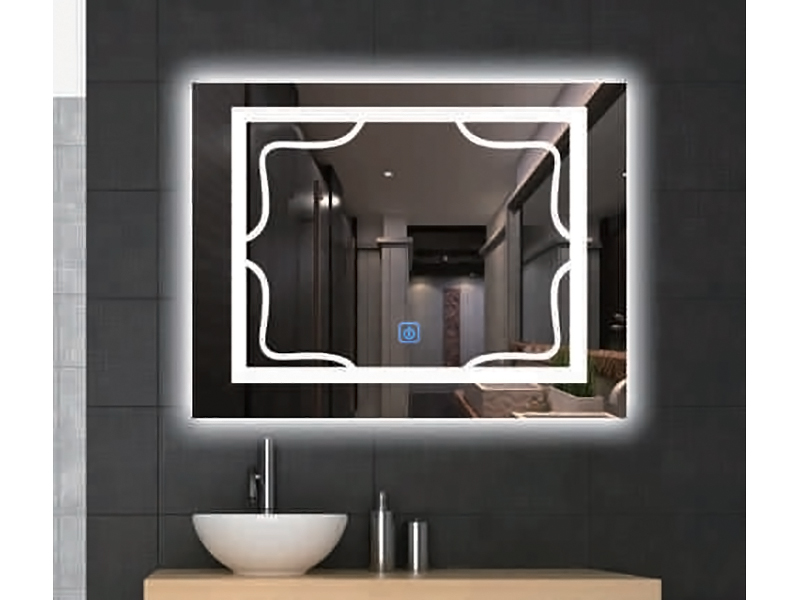
The category of "glass mirror decoration" encompasses a wide spectrum of products, each suited to different design intentions and functional requirements. Understanding the key types helps buyers and designers select the right solution from the outset.
While the bathroom remains the primary arena for decorative glass mirrors, their application extends well beyond the vanity wall. Each space presents distinct size, style, and durability considerations.
Bathroom and Vanity: This is where decoration and function converge most completely. A mirror above the vanity must be sized appropriately to the sink or countertop — ideally 2–4 inches narrower than the vanity on each side — while also harmonizing with the fittings, tile palette, and overall room proportions. For detailed sizing guidance, refer to our article on how to choose the size of bathroom mirrors. In wet-zone environments, moisture resistance is a non-negotiable specification: mirrors must feature sealed edges and waterproof backing to prevent silvering degradation over time.
Entryways and Hallways: A large decorative mirror in an entryway creates an immediate impression of space and light, making it one of the most cost-effective interventions in residential design. Tall, vertical formats or arched mirrors work particularly well in hallway applications, where ceiling height is often underutilized.
Living Rooms and Dining Areas: Positioned opposite a window or light source, a large glass mirror in a living area can effectively double the perceived brightness of a room. Gallery-style arrangements — multiple mirrors of varying shapes and sizes grouped on a single wall — have gained considerable traction in contemporary residential design.
| Space | Recommended Mirror Type | Key Consideration |
|---|---|---|
| Bathroom / Vanity | LED mirror, frameless flat glass | Waterproof backing, anti-fog |
| Entryway / Hallway | Arched, full-length, framed | Vertical proportion, wall anchoring |
| Living Room | Large statement mirror, gallery grouping | Light amplification, scale balance |
| Hospitality / Hotel | Backlit LED, antique glass, custom-cut | Brand ambiance, durability, custom sizing |
One of the most consequential stylistic decisions in glass mirror decoration is whether to choose a framed or frameless design. Both approaches have distinct design implications and practical trade-offs.
Frameless mirrors offer a clean, uninterrupted reflective surface that suits modern and minimalist interiors. Without a frame competing for visual attention, the mirror reads as an architectural element — a seamless part of the wall rather than a hung object. Frameless mirrors are also easier to clean and maintain, with no frame channels to accumulate moisture or grime. In bathrooms, this makes them a practical as well as aesthetic choice.
Framed mirrors introduce texture, color, and material contrast into a space. A wooden frame adds warmth; a brushed brass or matte black metal frame signals sophistication; an ornate carved frame creates a focal point with genuine decorative character. The frame also serves a structural purpose — protecting the glass edges and providing a clear mounting surface. In traditional, transitional, or maximalist interiors, a well-chosen framed mirror can anchor an entire wall's design narrative.
For commercial and contract projects, the choice is often dictated by brand standards. Hospitality environments tend to favor framed mirrors with custom finishes to align with interior design specifications, while healthcare and fitness facilities typically lean toward frameless for ease of sanitation. The ability to specify both formats — along with custom dimensions — is a key advantage when working with a dedicated mirror manufacturer.
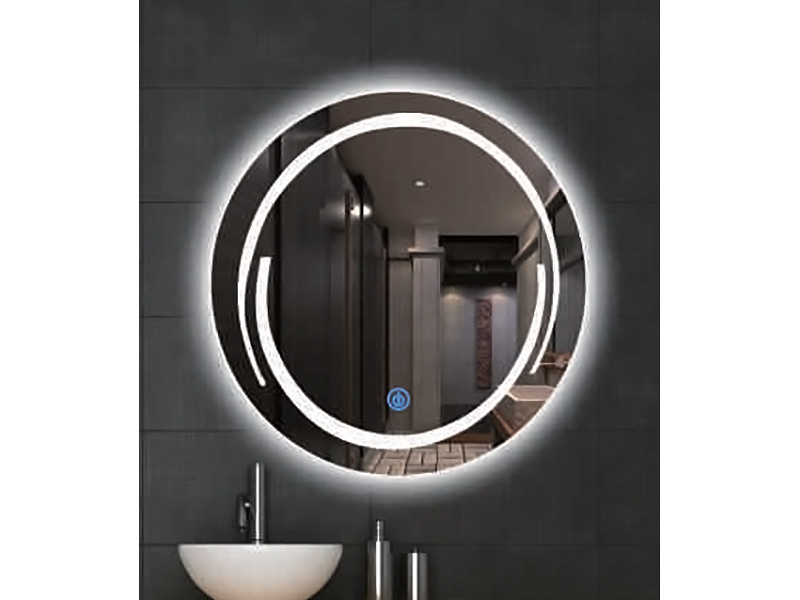
The visual appeal of a decorative glass mirror is immediately apparent, but its longevity is determined by what lies behind the reflective surface. Mirror quality is fundamentally a materials science question, and buyers sourcing for commercial or high-humidity environments should understand the key differentiators.
The two primary backing systems used in modern mirror glass manufacturing are silver-backed and aluminum-backed coatings. Silver-backed mirrors — the traditional standard — produce a brighter, warmer reflection and are widely preferred for residential and hospitality use. However, silver is more susceptible to oxidation when exposed to moisture, making proper edge sealing critical. Aluminum-backed mirrors are more resistant to humidity and chemical exposure, making them a common choice for commercial bathrooms and industrial applications where cleaning agents are used frequently.
The rear protective layer — typically a coat of copper-free paint or a polymer sealant — plays an equally important role. High-quality mirrors use multiple protective layers to prevent moisture ingress at the edges, which is the most common cause of black edge spotting (known as "silvering degradation") in bathroom mirrors. Reputable manufacturers also apply a full-coverage waterproof backing rather than a partial coating, ensuring protection across the entire mirror surface rather than only the center panel.
For tempered glass mirrors, the manufacturing process involves controlled thermal or chemical treatment that increases surface compression, resulting in glass that is approximately four times stronger than standard annealed glass of the same thickness. When tempered glass does break, it fractures into small, blunt-edged fragments rather than sharp shards — a critical safety advantage in public restrooms, gyms, and family bathrooms.
For interior designers, fit-out contractors, and procurement managers working on large-scale projects, off-the-shelf mirror products rarely meet every specification. Hotel bathrooms, restaurant restrooms, commercial office lobbies, and retail environments all involve unique dimensional requirements, finish specifications, and volume considerations that demand a more tailored approach.
Working directly with an OEM/ODM bathroom mirror manufacturer offers several structural advantages over retail sourcing. First, custom sizing eliminates the compromises that come with standard dimensions — a mirror can be specified to the exact millimeter to suit an architectural detail or joinery package. Second, finish coordination becomes possible: frame materials, colors, and surface treatments can be aligned with the broader interior specification rather than selected from a fixed catalogue. Third, volume pricing for commercial orders significantly reduces per-unit cost compared to retail channels, often making higher-specification mirrors economically viable for projects that might otherwise settle for budget alternatives.
D-MAN specializes in supplying bathroom mirror solutions to B2B clients across Eastern Europe, the Middle East, Australia, and beyond, with full OEM and ODM capabilities spanning standard flat mirrors, LED-integrated mirrors, and custom-designed decorative formats. Every project begins with a detailed consultation covering specification, packaging, certification requirements, and delivery logistics — ensuring that the decorative vision of the design team translates faithfully into the finished product installed on site.
PVC Bathroom Cabinets: The Ultimate Guide to Durability & Style
Common Bathroom Design Trends 2026: What's Changing and Why It Matters
Your email address will not be published. Required fields are marked *

 Tel: +86 13967167585
 E-mail: [email protected]
Copyright 2023 Anhui D-MAN Smart Home Co., Ltd. All Rights Reserved Shower Enclosures Manufacturers Shower Room Design Custom
