


 Français
 عربى
عربى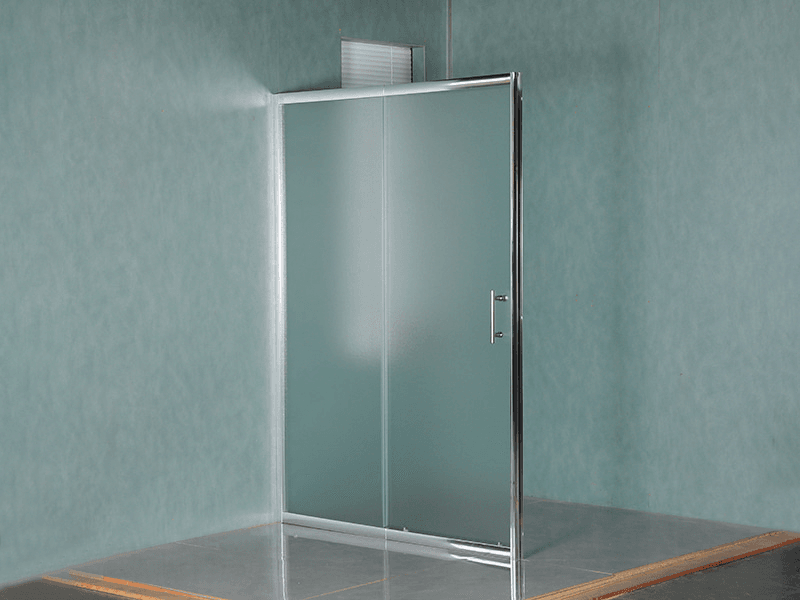
Product Consultation
Your email address will not be published. Required fields are marked *
When you are choosing glass for a frameless shower enclosure, the number that comes up most often is 3/8 inch. That is 10 mm in metric, and for most residential bathrooms it is the practical default. The step up to 1/2 inch (12 mm) costs more, weighs more, and puts more strain on hinges and wall brackets. So before you spend the extra money, it helps to know exactly what that added thickness buys you. In short: choose 3/8 for standard panels and most hinged doors, and reserve 1/2 for very wide fixed panels, heavy steam enclosures, or a deliberately thicker edge look.
Content
Shower glass is almost always tempered safety glass. The thickness is measured in inches or millimeters. The two common sizes for frameless shower enclosures are 3/8 inch (10 mm) and 1/2 inch (12 mm). A thinner 1/4 inch glass is used in framed doors where the metal frame carries most of the load. Once you remove the frame, the glass must support itself and resist flexing when the door swings or the panel is bumped.
In manufacturing, both thicknesses are produced to standard tolerances. The actual difference is about 2 mm, but that 2 mm changes the stiffness, weight, and visible edge width in ways that matter for hardware selection and installation.
If you are using a fully framed shower door, 1/4 inch glass can be acceptable because the metal profile provides rigidity. For semi-frameless designs, 3/8 inch is the common baseline. For a true frameless look, the door and fixed panels rely on hinges, glass-to-glass clamps, and wall brackets. Thicker glass reduces deflection and makes the door feel more solid.
This is why we see 3/8 inch glass used in the majority of frameless installations. It balances weight, strength, and cost. The 1/2 inch option is the premium choice that is often requested for large walk-in panels, especially when the panel is wider than about 30 inches or when the door is taller than about 80 inches.
Glass is heavy. A standard 3/8 inch panel weighs about 2.1 pounds per square foot, while a 1/2 inch panel weighs about 2.5 pounds per square foot. For a 30-square-foot enclosure, that is a difference of roughly 12 pounds. More weight means more load on the hinges, clamps, and rollers. Many standard frameless hinges are rated for 3/8 glass. If you step up to 1/2, you need to confirm that the hinge load rating can handle the heavier door, or specify heavy-duty hardware.
In daily use, 3/8 glass feels light and responsive. The door slides easily and the panel does not flex under normal pressure. For most people, this level of stability is completely comfortable. When you step up to 1/2, the door feels heavier and more substantial, especially when sliding or swinging. For a single large fixed panel, the extra stiffness can reduce the chance of visible bowing. A product like our one-fixed-one-sliding shower screen shows how a 3/8 style panel handles everyday use without sacrificing a clean look.
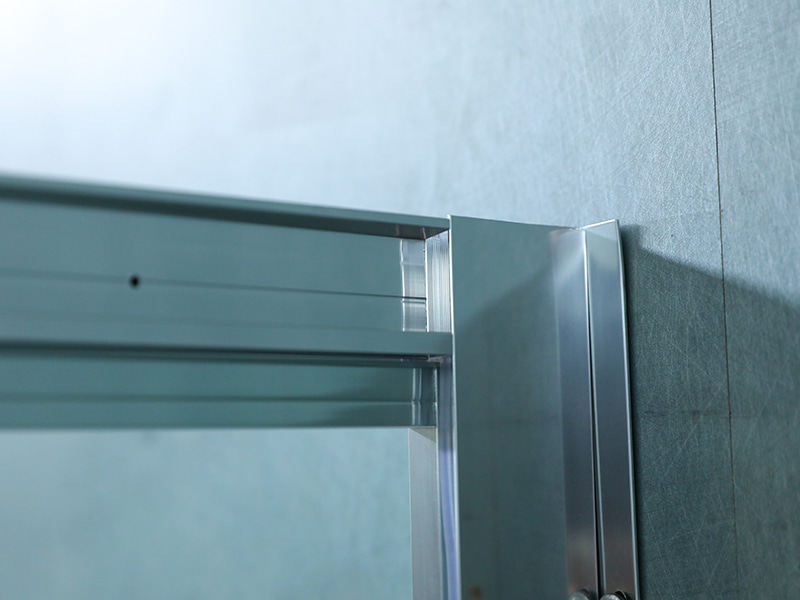 One Fixed One Sliding Shower Screen with Chrome ProfileThis clear tempered glass screen features a chrome aluminium profile and double holes handle, offering smooth sliding and easy operation for everyday use.View Product →
The edge of the glass is one of the most visible differences in a frameless enclosure. A 1/2 inch panel has a noticeably deeper polished edge, which reads as more substantial and premium in a high-end bathroom. If you want that bold edge, 1/2 inch is the right choice. A good example of this premium look is our two-fixed-two-sliding shower screen with a gold aluminium profile and printed glass.
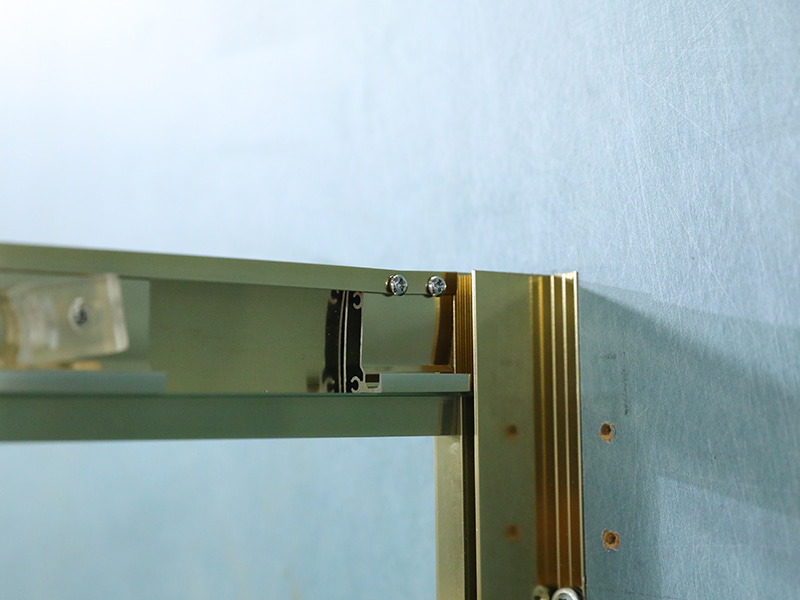 Two Fixed Two Sliding Shower Screen with Gold ProfileWith printed clear tempered glass and a gold aluminium profile, this screen adds a premium touch and a deeper polished edge for a luxurious bathroom look.View Product →
Glass is priced per square foot, and thicker glass costs more to produce because it has more material and requires longer tempering cycles. A 1/2 inch panel might add $150-$300 to a typical custom shower project compared with a 3/8 panel. However, the total installed cost also depends on reinforced hardware and potentially heavier frameless clips. For many buyers, the added cost is acceptable when the door is larger or the enclosure is a centerpiece.
There are a few situations where 1/2 inch makes sense rather than just being an optional luxury.
In those cases, the added cost is justified. Otherwise, 3/8 inch will give you a safe, stable, and visually clean enclosure at a more reasonable price.
Both 3/8 and 1/2 shower glass must be fully tempered to be used in a shower enclosure. Tempering is not a thickness-dependent feature; it is a heat treatment that makes the glass break into small, less dangerous fragments instead of large shards. A well-tempered 3/8 panel can be stronger than a poorly made 1/2 panel.
When you choose a supplier, ask about certification and edge finishing. The polished edges should be smooth and chip-free. At D-MAN, our tempered glass options include clear, gray, and matt finishes, each with a consistent edge quality. The right cleaner and routine maintenance will keep the glass clear and safe.
If you are caring for the glass, avoid abrasive chemicals. Consider choosing the right cleaner for the job.
Start with the panel dimensions. Measure the width and height of the opening. For panels up to about 30 inches wide and 80 inches tall, 3/8 inch is usually sufficient. For wider fixed panels, or if you prefer a thicker edge, 1/2 inch is your option.
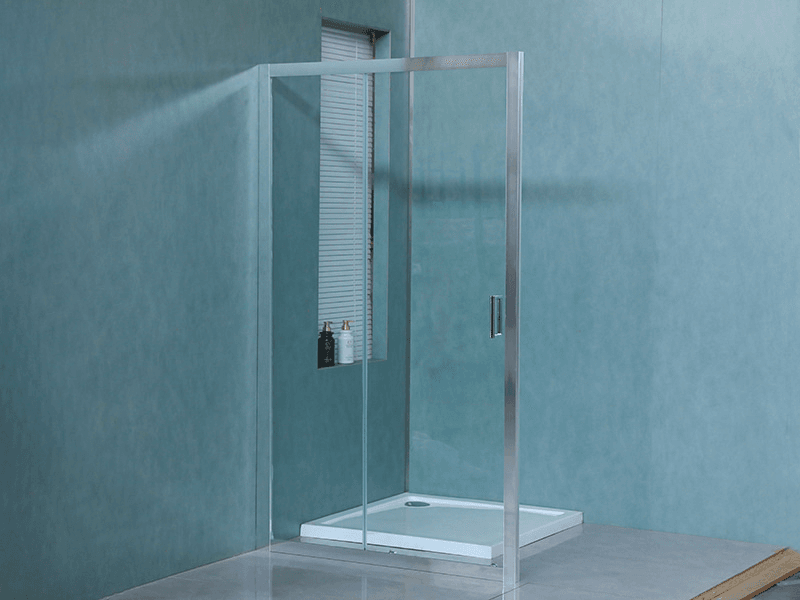
Next, confirm the hardware. Check the hinge load rating on the door. If you select 1/2 inch glass for a hinged door, make sure the hinge is rated for that weight. For sliding doors, the rollers must be strong enough to support the additional weight. A larger sliding enclosure, such as our clear tempered glass sliding shower enclosure without a tray, demonstrates a configuration where the door is supported by top and bottom rails.
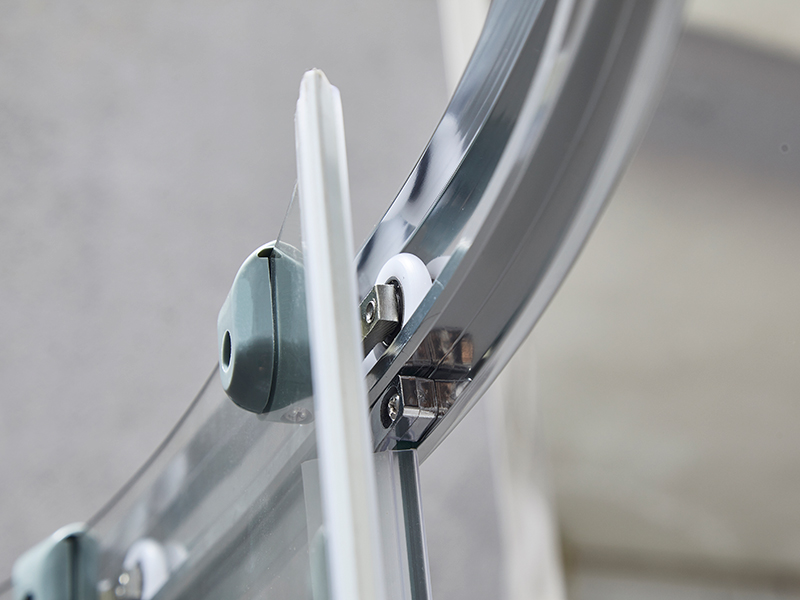 Sliding Shower Enclosure without Tray, Chrome ProfileThis clear tempered glass enclosure uses sturdy top and bottom rails, ensuring reliable sliding support. The chrome profile and double holes handle provide a safe, versatile solution.View Product →
Finally, calculate the budget. If the price difference is not a major issue, and the enclosure size makes 1/2 inch a safe choice, go ahead. If you are working with a standard bathroom and a mid-range budget, 3/8 inch will serve you well.
For most frameless shower projects, 3/8 inch (10 mm) tempered glass is the right balance of weight, stability, and cost. It handles standard doors and panels with confidence. Choose 1/2 inch (12 mm) when you need extra stability for wide panels, when you are building a steam enclosure, or when you want the wider edge that signals a premium installation.
Always work with a supplier who can provide certified tempered glass and reliable hardware. That combination does more for your shower door than the extra 2 mm alone.
How to Choose a Bathroom Shower Cubicle: Types, Materials and Key Buying Advice
The Advantages of Tempered Glass in Shower Enclosures and Bathroom Safety
Your email address will not be published. Required fields are marked *

 Tel: +86 13967167585
 E-mail: [email protected]
Copyright 2023 Anhui D-MAN Smart Home Co., Ltd. All Rights Reserved Shower Enclosures Manufacturers Shower Room Design Custom
