


 Français
 عربى
عربى
Product Consultation
Your email address will not be published. Required fields are marked *
Content
A shower tray forms the foundation of any shower enclosure, providing a waterproof base that directs water toward the drain while supporting daily use. The ideal shower tray balances durability, slip resistance, and aesthetic appeal while fitting your bathroom's dimensions and plumbing configuration.
Modern shower trays come in various materials, shapes, and sizes to accommodate different bathroom layouts. Acrylic trays dominate 65% of the market due to their affordability and lightweight properties, while stone resin and ceramic options cater to premium installations seeking longevity and luxury finishes.
Acrylic trays consist of a vacuum-formed acrylic sheet reinforced with fiberglass or wood composite backing. They offer excellent value with prices ranging from $80-$250 for standard sizes. Acrylic surfaces feel warm to the touch and resist staining when properly maintained.
However, acrylic trays require proper support frameworks to prevent flexing. Without adequate reinforcement, they may develop cracks after 5-7 years of heavy use. Low-quality acrylic can yellow over time when exposed to harsh cleaning chemicals.
Stone resin trays combine crushed natural stone with polyester resin, creating a dense, durable surface that mimics natural stone appearance. These trays cost $200-$600 but offer superior longevity with lifespans exceeding 15-20 years.
Stone resin provides excellent heat retention, staying warmer than ceramic alternatives. The material resists chipping and cracking better than acrylic, though it weighs significantly more at 25-35 kg for standard 900x900mm sizes, requiring sturdy floor support.
Ceramic shower trays feature vitreous china or porcelain construction with glazed surfaces. Premium options range from $300-$800 and provide exceptional scratch resistance. The hard surface maintains its appearance indefinitely with minimal maintenance.
The primary drawback involves weight and fragility during installation. Ceramic trays weigh 40-60 kg and can crack if dropped or improperly supported. Once installed correctly, however, they outlast most alternative materials.
| Material | Price Range | Weight (900x900mm) | Lifespan | Slip Resistance |
|---|---|---|---|---|
| Acrylic | $80-$250 | 12-18 kg | 5-10 years | Moderate |
| Stone Resin | $200-$600 | 25-35 kg | 15-20 years | High |
| Ceramic | $300-$800 | 40-60 kg | 20+ years | Very High |
| Steel Enamel | $150-$400 | 20-30 kg | 10-15 years | Moderate-High |
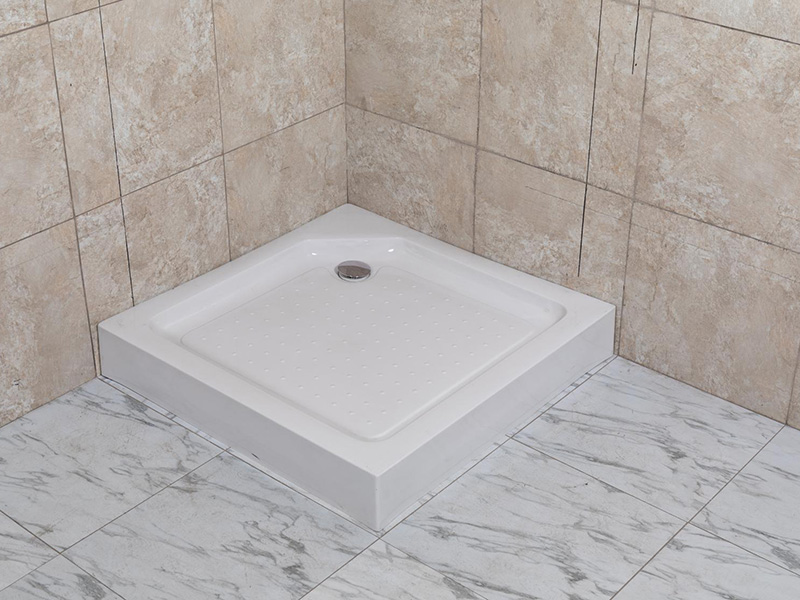
Square shower trays remain the most popular choice for compact bathrooms. Standard dimensions include 800x800mm, 900x900mm, and 1000x1000mm. The 900x900mm size accommodates most users comfortably while fitting efficiently in small spaces.
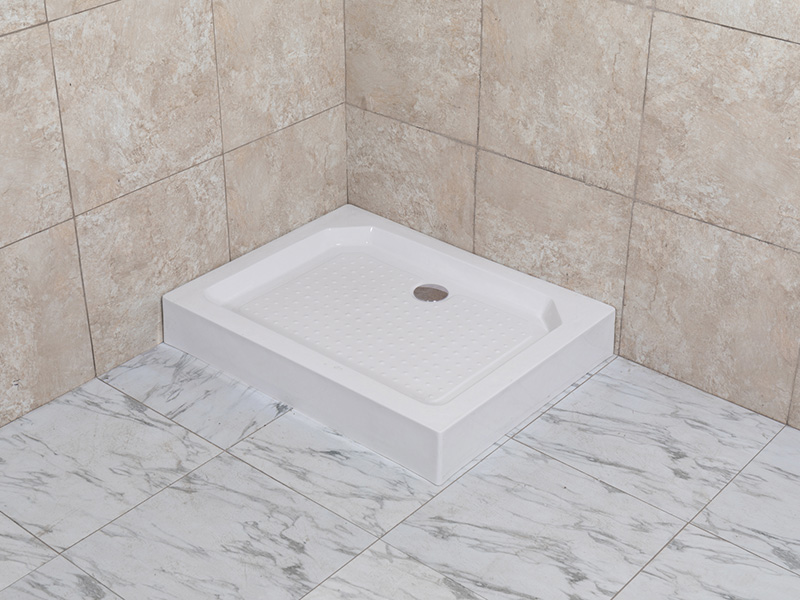
Rectangular trays suit narrow bathrooms or walk-in shower configurations. Common sizes range from 1200x800mm to 1700x800mm, providing ample standing space. These elongated designs work well with sliding door enclosures and maximize usable floor area.
Quadrant shower trays feature curved fronts that fit into corner spaces, optimizing awkward bathroom layouts. Standard quadrant radii measure 550mm or 800mm, with overall dimensions typically 800x800mm or 900x900mm. These space-saving designs create visual flow in compact rooms.
Offset quadrant trays provide asymmetrical configurations for unusual corner spaces. Custom angles allow installation in non-standard room geometries, though they cost 20-30% more than standard shapes due to specialized manufacturing.
Bespoke shower trays accommodate unique architectural requirements. Manufacturers offer custom cutting services for irregular spaces, with lead times of 3-6 weeks. Ultra-low profile trays with heights under 30mm enable barrier-free access for accessibility-compliant bathrooms.
Walk-in shower trays extend beyond traditional boundaries, sometimes spanning entire bathroom widths. These minimalist designs require precise floor leveling and linear drainage systems, increasing installation complexity but delivering contemporary aesthetics.
Recessed shower trays sit flush with the surrounding floor, creating seamless transitions ideal for wet room designs. This method requires floor excavation of 100-150mm to accommodate the tray depth plus drainage slope. Professional installation costs $300-$600 additional to tray price.
Proper waterproofing proves critical for recessed installations. Contractors must apply liquid membrane or sheet waterproofing extending 150mm up adjacent walls before tiling. Failure to waterproof correctly leads to structural damage within 2-3 years.
Raised platforms elevate the shower tray above finished floor level, simplifying drainage connections. Platform heights typically measure 100-150mm, constructed from timber framing or masonry blocks. This approach suits concrete floors where excavation proves impractical.
Platform installations require step-up considerations for user safety. Building codes mandate non-slip surfaces on platform edges and recommend contrasting colors to highlight height changes. Elderly users may find raised platforms challenging without grab bars.
Traditional central drains position the waste outlet at the tray's midpoint, requiring four-way sloping. This design works reliably with flow rates of 12-15 liters per minute, sufficient for standard showerheads. Central drains suit square and rectangular trays equally.
Modern central wastes feature easy-access covers for hair removal and cleaning. Quick-release mechanisms allow maintenance without tools, reducing blockage risks. Premium models include anti-odor traps preventing sewer gas infiltration.
Linear drains run along one edge of the shower tray, enabling single-plane sloping that simplifies installation. These systems handle higher flow rates up to 30 liters per minute, accommodating rainfall showerheads and body jets. Linear drains cost $150-$400 compared to $30-$80 for central wastes.
Stainless steel linear drains offer sleek, contemporary appearances with grating options in chrome, brushed nickel, or matte black finishes. Installation requires precise channel alignment during tray positioning, making professional fitting advisable.
Shower pumps enable installation where gravity drainage proves impossible, such as basement bathrooms or internal rooms distant from soil stacks. Macerator pumps cost $200-$500 and require electrical connections meeting IPX4 waterproof standards.
Pump systems increase noise levels during operation, typically measuring 45-55 decibels. Sound insulation around pump housings reduces disturbance to adjacent rooms. Regular maintenance every 6 months prevents motor failures and extends pump life to 8-10 years.
Rinsing the shower tray after each use prevents soap scum accumulation and mineral deposits. A quick squeegee wipe removes standing water, reducing slip hazards and inhibiting mold growth. Weekly deep cleaning with pH-neutral cleaners maintains surface integrity without damaging protective coatings.
Avoid abrasive scrubbers on acrylic surfaces, which scratch easily and trap dirt. Stone resin and ceramic tolerate mild abrasives but benefit from soft microfiber cloths. Vinegar solutions effectively dissolve limescale on all materials when applied monthly in hard water areas.
Minor acrylic scratches respond to polishing compounds designed for automotive clear coats. Deep cracks require professional repair kits costing $20-$50, though replacement often proves more economical for extensive damage. Stone resin chips fill with epoxy resins matched to original colors.
Ceramic tray repairs involve porcelain fillers for small chips, but cracked units necessitate complete replacement due to structural compromise. Professional reglazing services restore faded ceramic surfaces for $150-$300, extending tray life by 5-7 years.
Shower tray slip resistance follows DIN 51097 standards, with ratings from R9 (lowest) to R13 (highest). Minimum R10 rating suits residential bathrooms, while R11-R12 provides enhanced safety for elderly users or commercial facilities. Textured surfaces achieve higher ratings but require more vigorous cleaning.
Anti-slip coatings applied during manufacturing maintain effectiveness longer than aftermarket treatments. Look for trays with integrated texture patterns rather than sprayed-on coatings that wear away within 1-2 years. Some manufacturers embed silicon carbide particles for permanent slip resistance.
Accessible shower trays feature zero-threshold entries eliminating trip hazards. These low-profile designs measure 20-30mm in height compared to standard 40-50mm rims. Wheelchair users require minimum 900x900mm internal dimensions with 1500mm turning circles outside the tray.
Grab bar mounting points integrated into tray structures provide secure anchorage without compromising waterproofing. Reinforced backing plates distribute loads across wall studs, supporting users weighing up to 150kg. Building regulations mandate grab bars in accessible bathrooms per ADA or local equivalents.
Materials with high thermal mass like stone resin and ceramic retain heat longer, reducing cold shock when stepping into showers. Acrylic trays warm quickly but lose heat rapidly, potentially causing discomfort in unheated bathrooms. Under-tray heating elements cost $100-$200 and maintain comfortable surface temperatures year-round.
Thermostatic mixing valves prevent scalding by limiting maximum water temperature to 48°C. These devices prove essential for households with children or elderly members, reducing burn risk by over 90% according to safety studies.
Your email address will not be published. Required fields are marked *

 Tel: +86 13967167585
 E-mail: [email protected]
Copyright 2023 Anhui D-MAN Smart Home Co., Ltd. All Rights Reserved Shower Enclosures Manufacturers Shower Room Design Custom
