


 Français
 عربى
عربى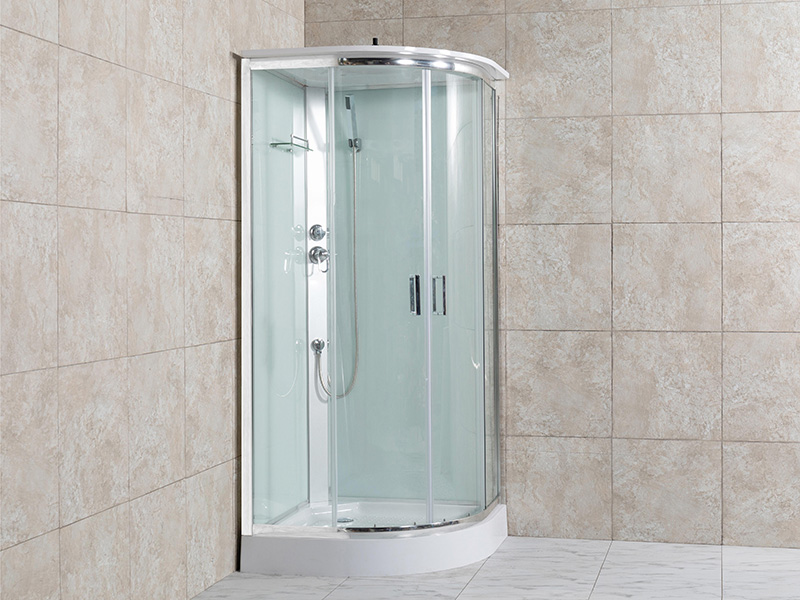
Product Consultation
Your email address will not be published. Required fields are marked *
A bathroom renovation usually starts with a problem. The opening for the shower is 2400 mm wide, the incoming light has to reach the rest of the room, and the client has already said that a bulky framed cabinet is not acceptable. The answer is an all glass shower enclosure, but the term covers more ground than it seems. In practical terms, an all glass shower enclosure means large tempered glass panels held by slim aluminium profiles, with the glass carrying nearly all of the visual weight. Fully frameless construction exists, but most experienced manufacturers recommend a small amount of framing because hinges, rollers and fixed panel clamps need a reliable anchor. The result is a shower wall that reads as almost pure glass while staying aligned and watertight for years.
Content
Conclusion first: an all glass enclosure is not defined by the absence of metal, but by how little metal you notice. Profile widths of 20 to 30 mm, clear gaskets and glass-to-glass joints create the continuous transparent surface that buyers expect from the phrase. The value is practical, not just aesthetic. With less frame, there is less surface for soap scum to cling to, the view through the bathroom is unobstructed, and small spaces feel larger because the eye can travel past the shower wall.
The trade-off is that the glass specification and the hardware quality have to be higher. A heavily framed enclosure can hide a slightly warped profile behind a thick trim; a near-frameless enclosure has nowhere to hide. That is why production consistency matters more here than in any other bathroom category.
The first requirement for any shower enclosure is fully tempered glass. Tempering is a thermal process that puts the glass surface under compression, so that when it breaks, it shatters into small blunt fragments rather than long sharp shards. In a wet room, where a person can slip and land against the panel, that behavior is a safety requirement, not an upgrade. Standard panels are 6 mm thick; 8 mm is the better choice for wide sliding doors because it reduces flex and keeps the bottom guide aligned over time.
Buyers should ask for the tempering certificate and the permanent corner stamp on the glass. For an export order, the specification should state the thickness, the edge finish and the relevant safety standard, usually EN 12150 in Europe or ANSI Z97.1 in North America.
The finish of the glass sets the privacy level and the amount of light passing through. The right choice depends on the bathroom orientation, who uses the room, and how much cleaning you want to do.
| Finish | Appearance | Typical Use |
|---|---|---|
| Clear tempered | Full transparency, maximum light | Small bathrooms, guest bathrooms |
| Gray tempered | Reduced glare, slightly muted view | Bright bathrooms, south-facing rooms |
| Matt tempered | Frosted, soft light, high privacy | Shared bathrooms, family use |
| Printed glass | Decorative pattern or mosaic lines | Hotels, feature showers, design-led projects |
Matt and printed finishes also hide water spots better than clear glass, which is worth remembering in hard water areas. For a hotel or rental bathroom, selecting a finish that does not show every drop reduces maintenance complaints.
With so little frame visible, the profile finish becomes part of the design language. Chrome is the traditional choice and matches most tapware; black reads as contemporary and hides limescale well; gold creates an accent look. The production method matters too. Anodized aluminium resists humidity better than painted surfaces, and on black powder-coated profiles, buyers should inspect the corners for chips, because exposed aluminium will tarnish differently from the coated face.
The double-hole handle is a small detail with a real function. Spreading the pulling force across two fixing points reduces stress around the glass holes, which is where cracks start on a heavily used door. A 700 mm door opened ten thousand times a year makes that detail important.
The bathroom layout decides the door type. Each configuration solves a different spatial problem, and the wrong choice becomes obvious in daily use.
A sliding enclosure works when a swinging door would hit a vanity, a toilet or a towel rail. It takes its structural stability from a top rail and a bottom guide, so the track design matters. A low-profile bottom guide that can be wiped out easily is the feature to look for, because that track is the first place where hair and soap residue build up.
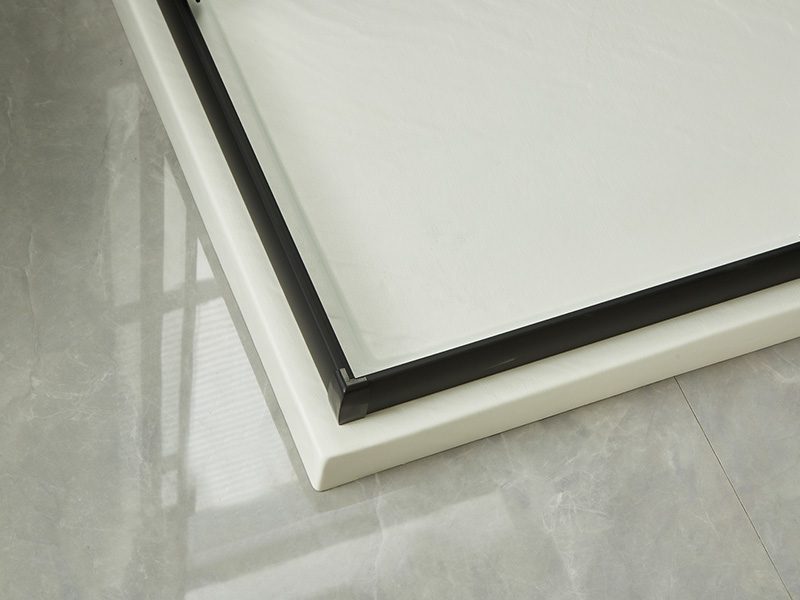 SQ Sliding Shower Enclosure with Tray and Black Aluminium FrameThis sliding enclosure suits tight spaces where a swinging door would obstruct fixtures. Its low-profile bottom guide is easy to clean, and the included tray keeps water contained. Available in sizes from 700 to 1200 mm.View Product →
When the opening is 800 mm or wider and the floor space in front is clear, a pivot door is the most comfortable option. The pivot hinges at the top and bottom allow the door to swing in both directions, which helps elderly users and anyone carrying a child. The mechanism has to be aligned precisely with the glass thickness, which is one more reason to buy the complete enclosure from a single manufacturer instead of matching loose parts on site.
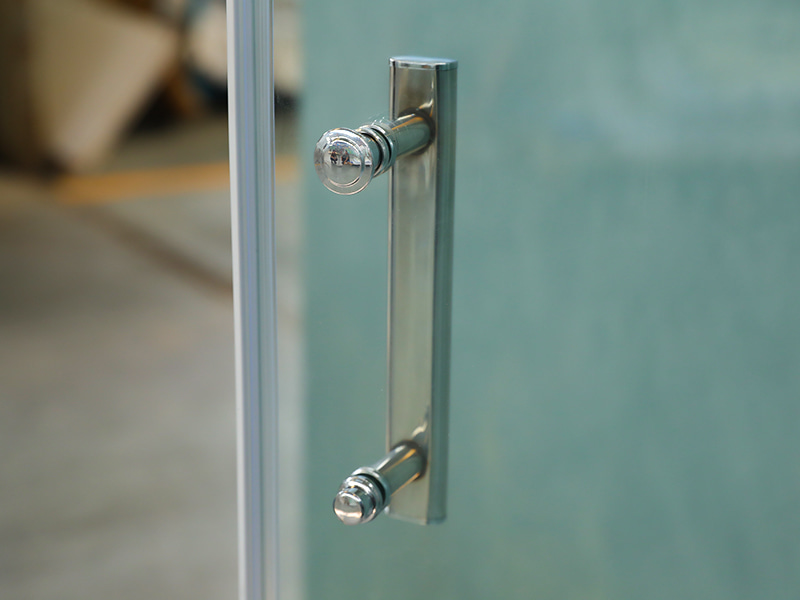 RSQ Pivot Shower Enclosure with Chrome Frame and Double Holes HandleIdeal for openings of 800 mm or wider with clear floor space, this pivot door swings both ways for easy access. The chrome-finished aluminium resists humidity, and the double holes handle ensures smooth operation.View Product →
Where a bathtub does the job of the shower base, a bath shower screen keeps the water inside the tub area. These screens are shorter than full-height enclosures, typically using one fixed panel and one sliding panel, and they are the most cost-effective way to add a shower function to a bathroom that already has a tub.
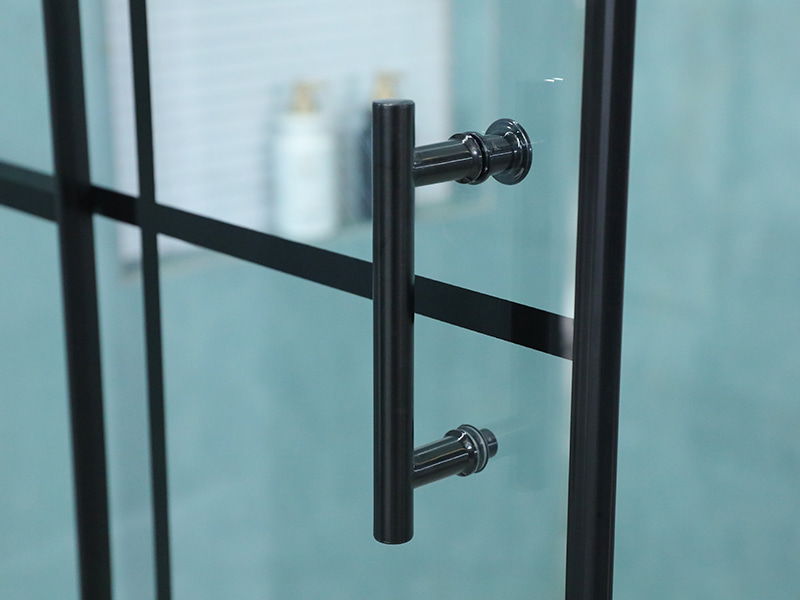 SD-4 One Fixed One Sliding Shower Screen with Black Aluminium ProfileThis bath shower screen adds a shower function over a tub using one fixed and one sliding panel. Tempered glass enhances safety, while the double holes handle eases movement. Consider roller quality for long-term durability.View Product →
On a sliding enclosure, the rollers are the most stressed component. Rollers with aluminium bearings suit lightweight screens, brass bearings run smoother and last longer on heavier glass, and zinc-alloy rollers belong at the budget end. A quick question to ask the supplier is the wheel material and the expected cycle count. A roller that fails after six months turns a premium glass door into a recurring repair job.
The bottom guide design is just as important. A double-guide system, running in a channel at both top and bottom, keeps the glass in plane and stops the door from knocking against the fixed panel. That repeated knocking is one of the main causes of chipped edges and cracked corners, both in transit and in daily use.
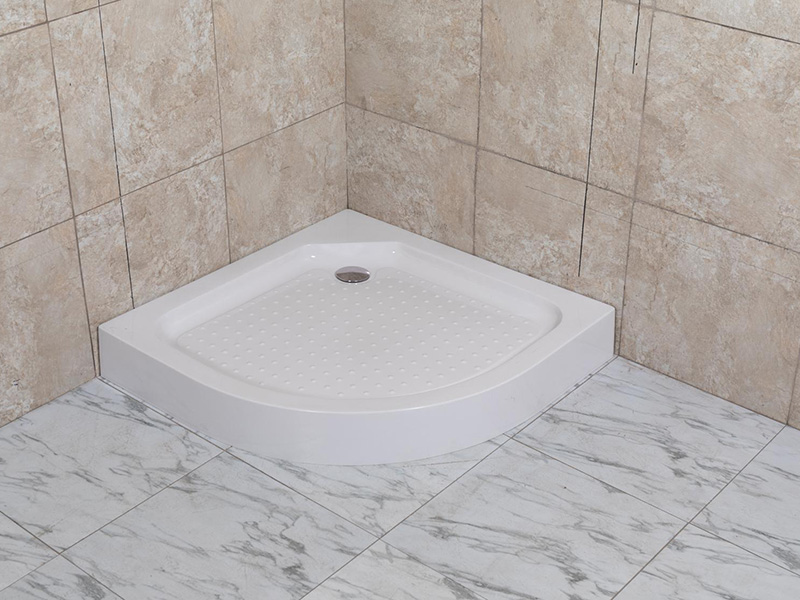
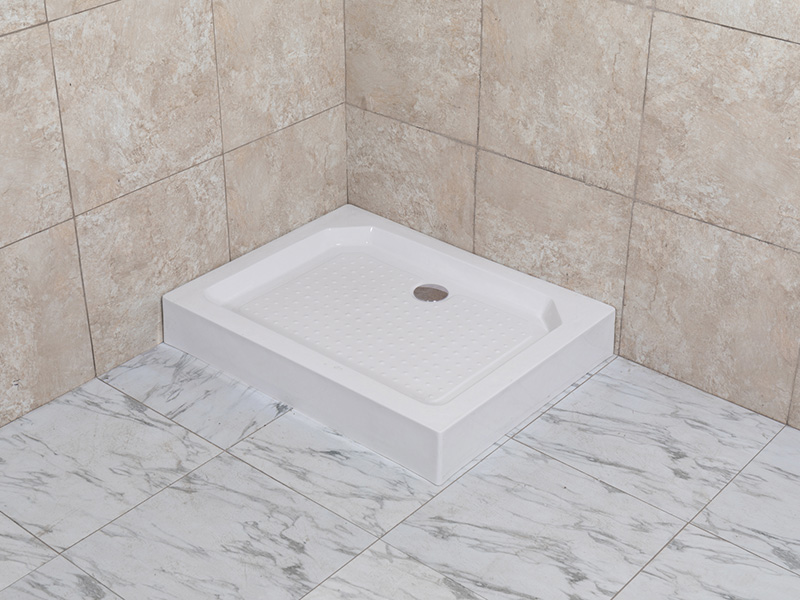
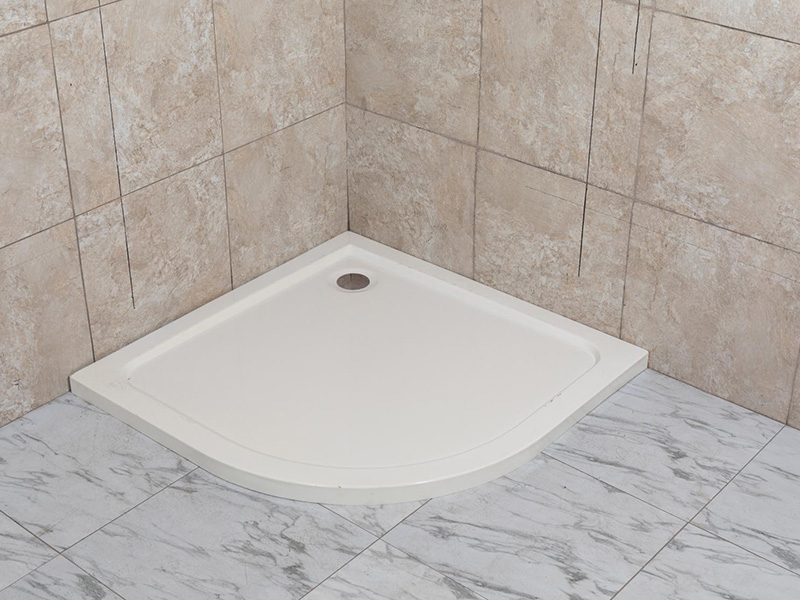
An all glass enclosure is only as watertight as its base. Acrylic trays are the standard for export production because they are light, warm underfoot and simple to install. The drain position is the deciding detail. A corner drain works when the waste pipe sits at the corner, while an offset drain allows more layout flexibility. The shape controls how much floor the tray claims: a curved or sector tray can save up to 300 mm of space in a compact bathroom, while a square tray gives a cleaner footprint for a frameless look. Before finalizing a renovation plan, it is worth reading how the shape of the shower tray affects space utilization.
For importers, distributors and renovation contractors, this checklist prevents most warranty claims:
Cleaning is also part of the specification. The wrong cleaner can damage the glass surface and leave permanent streaks, especially on coated or printed finishes. A practical guide on choosing the right cleaner for tempered glass explains how to match the cleaner to the finish and keep the enclosure looking new.
The all glass shower enclosure is not one product but a set of decisions: the glass thickness and finish, the profile color, the door configuration, the hardware quality and the drainage base. When those pieces are matched correctly, the enclosure delivers the open, light bathroom that the name promises. When they are not, problems surface within the first year. That is why most serious buyers choose a manufacturer that supplies the glass, the tray and the hardware as one coherent set, and uses OEM and ODM support to adapt the product to their own market.
Your email address will not be published. Required fields are marked *

 Tel: +86 13967167585
 E-mail: [email protected]
Copyright 2023 Anhui D-MAN Smart Home Co., Ltd. All Rights Reserved Shower Enclosures Manufacturers Shower Room Design Custom
